Postpartum Guides
What is a peri bottle, and how do you use one after birth?
A peri bottle is a squeeze bottle for rinsing with warm water after the toilet in the weeks after birth. Here is how to use one, what to put in it and when to start.
Quick answer
A peri bottle (short for perineal bottle) is a small squeeze bottle that you fill with warm water and use to rinse the area between your legs after going to the toilet. It is used in the days and weeks after birth, when wiping with toilet paper is uncomfortable. You rinse, pat dry and change your pad.
Rinsing with warm water is standard advice from Australian midwives after a vaginal birth, and it is useful after a caesarean too. This guide covers what a peri bottle is, how to use one step by step, what to put in it, and when to check in with your midwife or GP.
At a glance
- What it is: a squeeze bottle with a spout, used to rinse the perineal area with warm water
- When you use it: every toilet visit, from the first one after birth
- What goes in it: warm tap water, nothing else
- How long for: most mums use one for the first two to four weeks
- Who it suits: anyone who has given birth, vaginally or by caesarean
Why rinse instead of wipe?
After a vaginal birth the perineum, the skin between the vagina and the anus, is usually swollen and tender. It may be grazed, or stitched if you had a tear or an episiotomy. Dry toilet paper drags across that skin, and it can catch on stitches. Our guide to perineal tears after birth explains what the first weeks of recovery usually look like.
There is also bleeding to manage. Postpartum bleeding, called lochia, happens after every birth and can last for several weeks. Rinsing with warm water each time you use the toilet helps keep the area clean without rubbing.
Many mums also find that passing urine stings in the first few days, because urine touches grazed skin. Running warm water over the area while you wee dilutes the urine as it passes, and many women find that more comfortable. If it still stings, tell your midwife.
How to use a peri bottle, step by step
- Fill it before you sit down. Use warm tap water. Test it on the inside of your wrist first. It should feel comfortably warm, not hot.
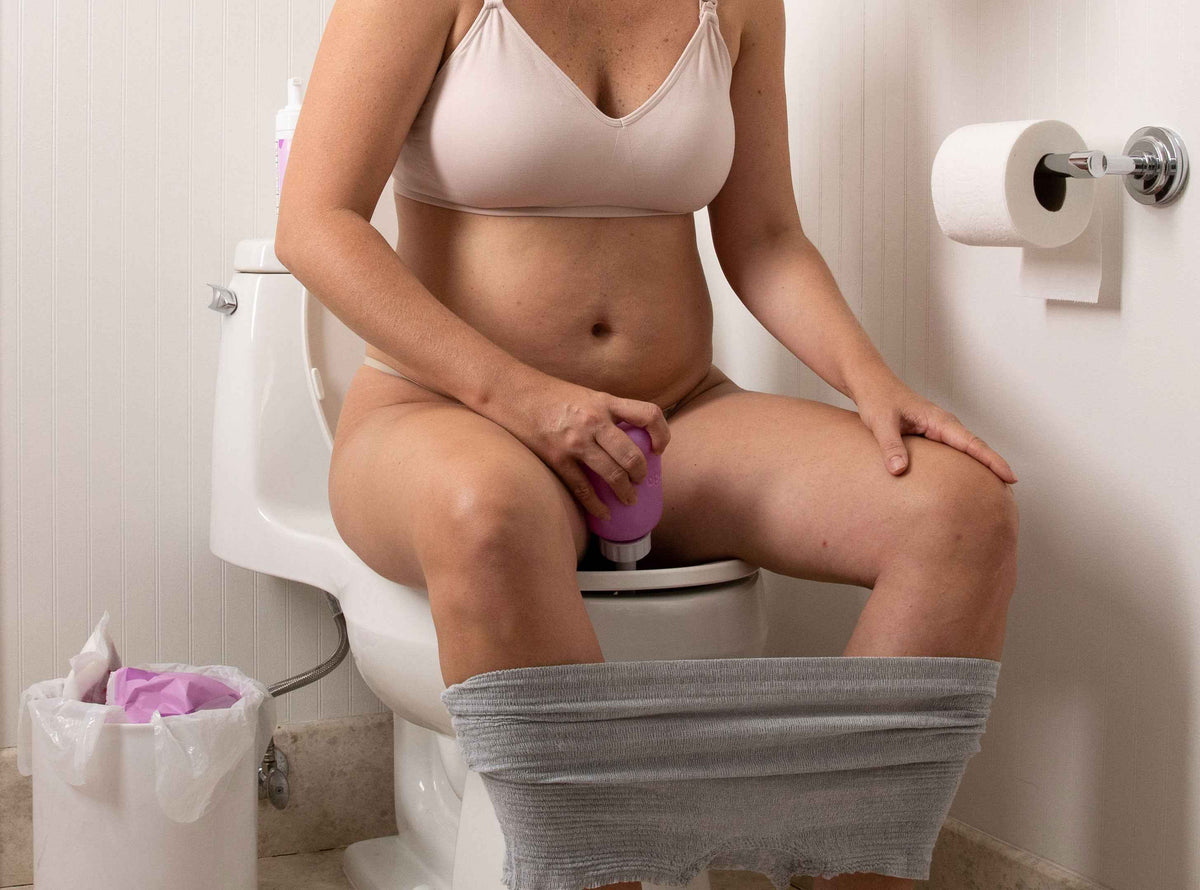
- Sit on the toilet as you normally would. Hold the bottle so the spout points towards the perineal area.
- Squeeze gently while you wee. A steady stream is enough. Keep rinsing for a few seconds after you finish, moving from front to back.
- Pat dry. Use soft toilet paper or a clean, soft cloth. Pat from front to back and do not rub.
- Change your pad. Put on a fresh maternity pad each time, then wash your hands.
- Rinse the bottle. Empty it, rinse it with warm soapy water and leave it open to air dry.
Keep the bottle next to the toilet so it is there every time, including overnight. In the first days it helps to refill it straight after each use, so it is ready when you need it next.
A basic squirt bottle or an angled peri bottle?
Any clean squeeze bottle that delivers warm water will rinse the area. Some Australian hospitals hand out a basic one, and what you are given varies from hospital to hospital. Our guide to what Australian hospitals provide after birth covers what to ask before you pack.
The practical difference between bottles is reach. A straight spout has to be held underneath you, which means leaning forward when your abdomen or stitches are sore. An angled bottle is designed to be held upside down, so the water reaches while you sit normally.
| Feature | Basic squirt bottle | Angled, upside-down peri bottle |
|---|---|---|
| Spout | Straight | Angled neck |
| How you hold it | Underneath, leaning forward | Upside down, sitting normally |
| Flow | Depends how hard you squeeze | A steady stream you control |
| Where it comes from | Sometimes given out in hospital | You bring your own |
What do you put in a peri bottle?
Warm tap water is all you need. Do not add soap, antiseptic, salt or essential oils unless your midwife or doctor has specifically told you to. The skin is healing, and added products can irritate it.
When to start, and how long to keep going
Start with your first toilet visit after the birth, whether you are in hospital or at home. Most mums use a peri bottle at every toilet visit for the first two to four weeks, then stop when wiping feels comfortable again. There is no set end date, and some keep using one for longer.
It is worth having after a caesarean as well. You will still have lochia, and bending and twisting to wipe is hard while your abdomen is sore. Our C-section recovery guide covers the first six weeks.
When to check in with your midwife or GP
A peri bottle helps you keep clean and comfortable. It does not replace a check from a health professional. Contact your midwife, GP or maternity unit if you notice any of the following:
- pain, redness or swelling that is getting worse rather than better
- a discharge that smells unpleasant
- a fever, or feeling generally unwell
- stitches that look like they are coming apart
- bleeding that suddenly becomes heavier, or large clots
- trouble passing urine, or leaking that worries you
If you are unsure whether something is normal, ask. Your midwife would rather hear from you early.
Packing one before the birth
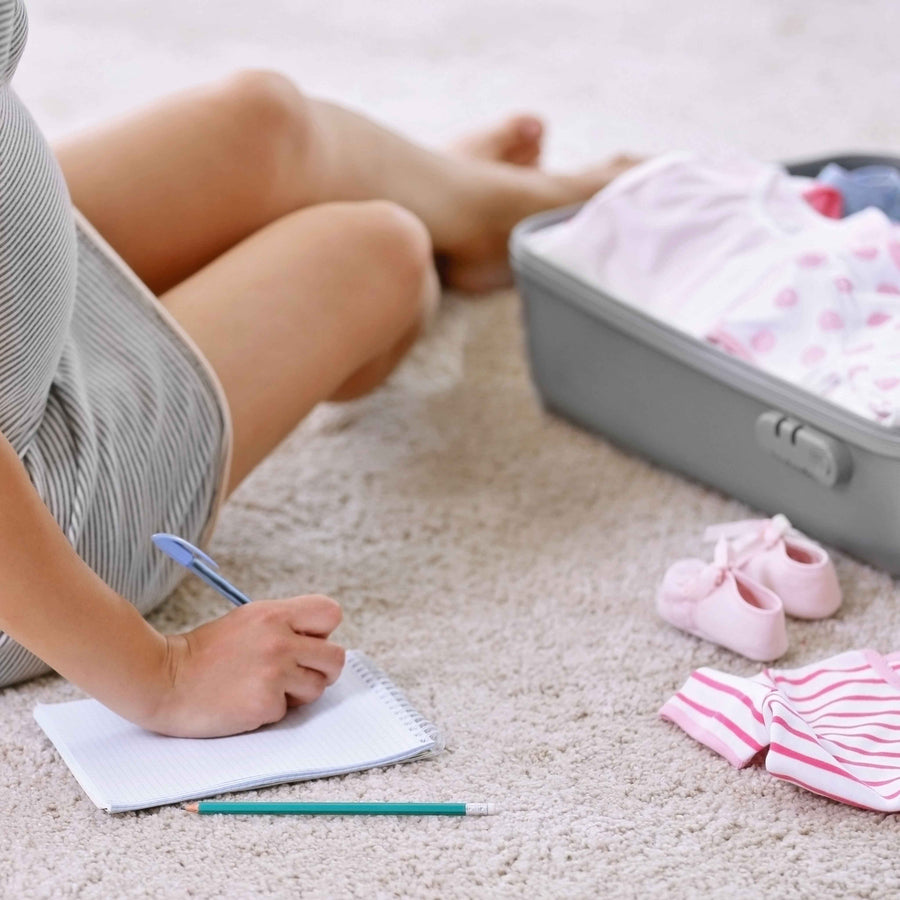
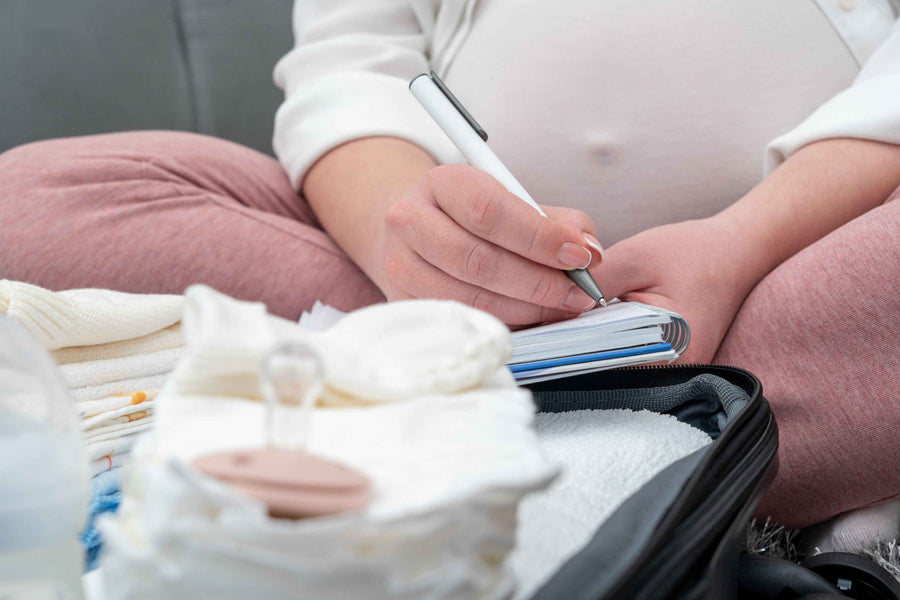
A peri bottle is one of the few recovery items you use within hours of giving birth, so it belongs in your hospital bag rather than at home. Our hospital bag checklist lists what to pack for you, not only for the baby.
If you would like an angled one, the Frida Mom Upside Down Peri Bottle holds 295ml, works upside down and has an angled neck, with a valve on the nozzle so you control when the water starts. It comes with a waterproof travel bag, and it is also included in the Hospital Labour & Delivery Kit.
FAQs
What is a peri bottle used for?
A peri bottle is used to rinse the perineal area with warm water after going to the toilet in the days and weeks after birth. It is an alternative to wiping with toilet paper while the area is tender, swollen or stitched, and while you have postpartum bleeding.
How do you use a peri bottle after birth?
Fill it with warm water before you sit down. While you are on the toilet, point the spout towards the perineal area and squeeze gently, rinsing from front to back during and after you wee. Pat dry with soft toilet paper, change your pad and wash your hands.
What do you put in a peri bottle?
Warm tap water only. Do not add soap, antiseptic, salt or essential oils unless your midwife or doctor has told you to, because added products can irritate healing skin.
Do I need a peri bottle after a caesarean?
It is still useful. Postpartum bleeding happens after a caesarean as well, and bending or twisting to wipe is uncomfortable while your abdomen is sore. Rinsing with warm water is an easier way to keep clean in the first weeks.
Can I use a peri bottle if I have stitches?
Yes. Rinsing with warm water and patting dry is the usual advice for looking after perineal stitches, because it avoids rubbing the area. If your stitches become more painful, look red or swollen, or seem to be coming apart, contact your midwife or GP.
How long do you use a peri bottle for?
Most mums use one at every toilet visit for the first two to four weeks after birth, then stop when wiping feels comfortable again. There is no fixed end date, and some keep using one for longer.
Do Australian hospitals give you a peri bottle?
Some do and some do not, and the bottles that are handed out are usually a basic straight-spout design. Ask your hospital or birth centre what they provide before you pack your bag, and bring your own if you would prefer an angled one.
How do I clean a peri bottle?
Empty it after each use. Once a day, take the cap off, wash the bottle and spout with warm soapy water, rinse well and leave it open to air dry before putting it back together.