Pregnancy Guides
What Australian hospitals give you after birth, and what to bring yourself
Hospital bag lists are long on baby outfits and short on the person doing the actual work. The question nobody seems able to answer clearly is what the hospital will hand you after the birth, and what you are expected to bring. The honest answer is: less than most first-time mums assume, and it varies from hospital to hospital.
This guide covers what Australian public and private maternity units typically supply during your stay, what they usually don't, how long you can expect to be there, and what to pack so the first bathroom visit is not a scramble. Always check your own hospital's list, and talk to your midwife about your recovery plan.
How long you will actually be in hospital
Postnatal stays in Australia are short. After an uncomplicated vaginal birth in a public hospital, discharge within 24 to 48 hours is common, and some hospitals offer early discharge within six to twelve hours with a midwife visiting you at home. After a caesarean, two to four nights is typical. Private hospitals generally keep you longer, often four to five nights.
That timeline is the key to the whole packing question. Whatever the hospital supplies, it supplies for a day or two. Your recovery runs for weeks, mostly at home, where nobody is handing anything out.
What public hospitals usually provide
Typically supplied during your stay
A gown for labour if you want one. It ties at the back, opens wherever it likes and is shared stock. Many women bring their own.
Maternity pads for the first day or so. Expect a small supply on the ward, not a stockpile to take home.
Ice packs in some birth suites, on request, in the first hours after a vaginal birth. Not every unit offers them, and they are not something you can take home.
Baby basics such as a cot, blankets, and in many units nappies and wipes for the stay. Some hospitals ask you to bring your own nappies, so check.
Formula and feeding equipment if there is a medical or feeding need, and access to a hospital breast pump on the ward.
Pain relief and medication prescribed by the team, and a discharge summary for your GP.
What they usually don't
This is the list that surprises people. Most Australian public hospitals do not supply disposable postpartum underwear (the American-style mesh knickers are not standard here), witch hazel liners, perineal foam or sprays, a peri bottle you can take home, nipple balm, your own toiletries, or comfortable clothes for after the birth. Some units hand out a plastic squeeze bottle for rinsing; many do not.
Private hospitals vary widely. Some provide a small pack of pads and toiletries; a few include a gift hamper. Treat anything beyond pads and a gown as a bonus rather than a plan.
Check your own hospital
Every maternity unit publishes a "what to bring" list, usually on the hospital website or in your antenatal booking pack. Read it at around 30 weeks, then pack for the gaps. If the list is vague, ask at your next appointment: "Do you supply pads, ice packs and a peri bottle, and can I take them home?"
Why the first week at home is the real gap
The first bathroom visit after a vaginal birth is the moment most women wish someone had warned them about. Sitting, wiping, and standing back up are all different for a while. Warm-water rinsing instead of wiping, a cold pad for swelling, and underwear that holds everything in place without pressing on anything are the three things Australian postnatal advice comes back to again and again. After a caesarean, the priority shifts to underwear that sits above the incision and pads for the bleeding, which happens after every type of birth.
None of that is supplied by the hospital for use at home, and it is genuinely hard to shop for in the first days after birth. Which is why it belongs in the hospital bag.
What to bring for yourself
For labour
Your own gown or an oversized shirt that opens at the front for skin-to-skin, non-slip socks, lip balm, hair ties, a water bottle with a straw, and phone charger with a long cable. Snacks for your support person.
For the first bathroom visits
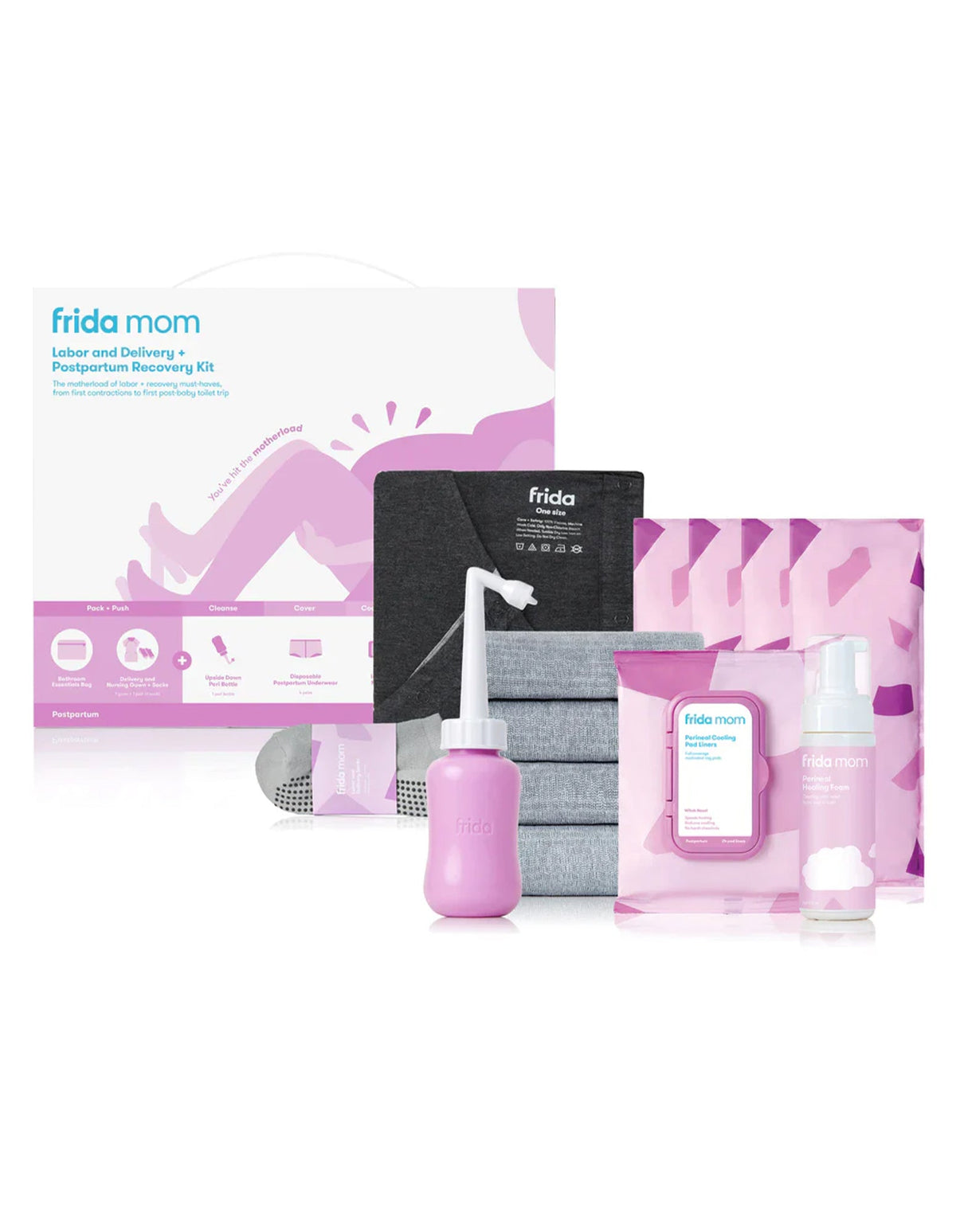
A peri bottle with an angled nozzle, maternity pads or instant ice pads, witch hazel cooling liners, perineal foam, and several pairs of soft disposable underwear. Pack these in a toiletry bag that can sit on the cistern so you are not asking someone to pass things.
For the ward
Loose dark clothes, slip-on shoes, your own pillow, toiletries, nipple balm, a feeding-friendly top, and paperwork: Medicare card, private health details, birth plan and your antenatal record.
For going home
An outfit for you that allows for a still-pregnant-looking belly, the baby's going-home outfit, and a correctly fitted car seat already installed. Leave room in the bag for paperwork and anything the hospital gives you.
When to pack it
By 34 to 36 weeks. About a quarter of Australian babies arrive before 39 weeks, and the recovery items are the ones that are awkward to send someone out for afterwards. If you are ordering online, order by 36 weeks so it is packed rather than in transit.
If something during your recovery does not feel right, such as heavy bleeding, a fever, wound concerns or pain that is getting worse rather than better, contact your midwife, the maternity ward or your GP. They would rather hear from you early.
Frequently asked questions
Do Australian hospitals provide maternity pads?
Most public hospitals supply a small number of maternity pads for the first day or so of your stay. You will need your own supply for the rest of the first week or two at home, when bleeding is still heavy.
Do hospitals give you a peri bottle in Australia?
Some do, some don't. Where one is supplied it is usually a basic plastic squeeze bottle for use on the ward. Pack your own if you want an angled nozzle or want to keep using it at home.
Do I need to bring nappies to hospital?
Many public hospitals supply nappies and wipes for the stay, but not all. Check your hospital's list, and pack a small supply either way for the trip home.
Do hospitals give you disposable underwear after birth?
Not usually in Australia. Disposable postpartum underwear is something to pack yourself. Choose a high-waist cut if you are having a caesarean so it sits above the incision.
How long do you stay in hospital after giving birth in Australia?
Typically 24 to 48 hours after an uncomplicated vaginal birth in a public hospital, sometimes less with early discharge and home midwife visits, and two to four nights after a caesarean. Private hospitals usually keep you four to five nights.
What should I pack for a caesarean?
The same recovery basics as a vaginal birth, with high-waist underwear that sits above the incision, loose clothing that does not press on the wound, and slip-on shoes so you are not bending to tie laces.
Can I take hospital supplies home?
Generally only what is in your room's supply, such as leftover pads. Ice packs, gowns and pumps stay on the ward. Ask your midwife; they will tell you what is yours to take.
If you would rather not assemble it all yourself, the Frida Mom Hospital Labour & Delivery Kit packs the gown, socks, peri bottle and the first week's recovery routine into one toiletry bag, and our hospital bag checklist covers the rest.