Baby Care Guides
Why Babies Can't Blow Their Own Nose (and What Parents Can Do Instead)
Wondering why your baby can't blow their own nose? Learn when children develop this skill, why congestion affects babies so much and how to safely help clear nasal mucus.

It seems obvious once someone says it, but when you're awake at 2am listening to your baby snuffle, snort and struggle through a blocked nose, it's one of those parenting realities that catches almost everyone by surprise.
Adults don't think twice about clearing their nose when they have a cold. Babies can't. Until they develop the coordination to blow their nose properly, they rely on you to help manage congestion. That's why even an ordinary cold can feel so much bigger when your little one is involved.
The good news? Once you understand why babies become so congested, it also becomes much easier to know how to help.
Why can't babies blow their own nose?
Blowing your nose sounds simple. It's quite a complicated skill. It requires someone to:
- understand the instruction
- close their mouth
- build pressure through the nose
- blow in a controlled way
- repeat it when needed
Young babies simply don't have the physical coordination or understanding to do this. Even toddlers often need lots of practice before they can successfully blow their nose. Until then, mucus simply stays inside their tiny nasal passages unless it naturally drains or a parent helps remove it.
At what age can children blow their nose?
There isn't one exact age. Many children begin learning somewhere between 2 and 3 years old, while others don't master it until they're closer to 4 years. Every child develops at their own pace.
If your toddler isn't blowing their nose yet, that's completely normal. Like using a spoon or putting on shoes, it's a skill that develops over time.
Why does congestion affect babies so much?
One thing many parents notice is that a baby with a cold often sounds far more congested than an adult. There are a few reasons:
Their nasal passages are tiny
A small amount of mucus can take up a surprising amount of space. That makes breathing through the nose noisier and can leave babies sounding very blocked up.
Babies breathe through their nose while feeding
When babies are breastfeeding or bottle feeding, they naturally breathe through their nose. If their nose is blocked, feeding can suddenly become much more difficult. You might notice your baby pulls away from the breast or bottle, feeds for shorter periods, becomes frustrated, or needs frequent breaks to breathe.
Congestion can interrupt sleep
Have you ever noticed your baby's congestion seems worse overnight? Many parents do. When babies lie flat, mucus can become more noticeable, making them sound noisier and making it harder to settle comfortably. This is one reason winter nights often feel particularly long.
Is it normal for babies to sound so noisy?
Yes. Babies are naturally noisy breathers. Snuffles, grunts and occasional congestion are common, particularly during the first year. A cold simply amplifies those sounds.
However, noisy breathing is different from difficulty breathing. If your baby is working hard to breathe, breathing rapidly, showing signs of respiratory distress or you're concerned about their breathing, seek medical advice promptly.
So... what can parents do?
The goal isn't to remove every tiny bit of mucus. Your baby's nose naturally produces mucus for a reason. Instead, the aim is to help remove enough mucus to make feeding and sleeping easier. One of the simplest approaches is the two-step method:
Step one: saline
Use saline to help loosen nasal mucus. Saline helps moisten thick mucus, making it easier to remove. Always use saline according to the manufacturer's instructions.
Step two: gentle suction
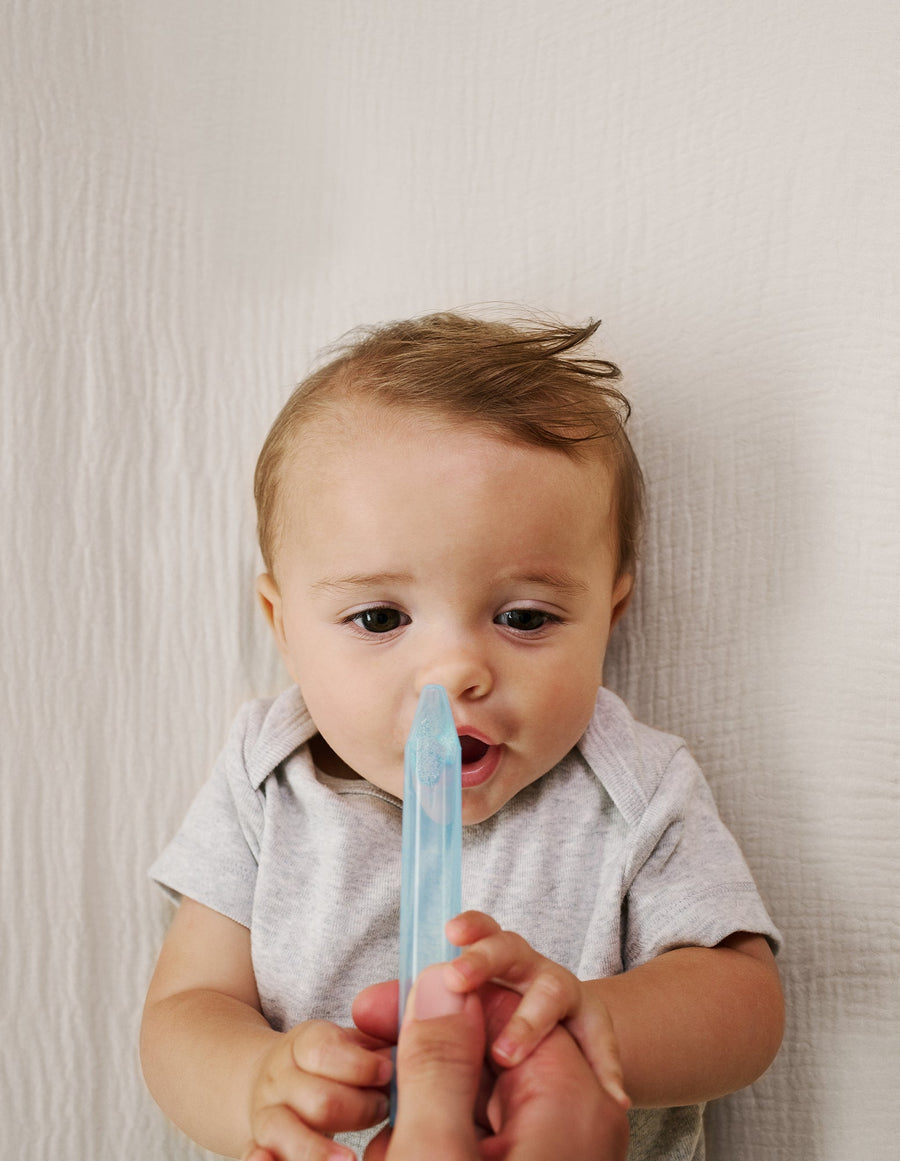
Once the mucus has loosened, use a nasal aspirator designed to help remove nasal mucus. A manual aspirator such as the Frida Baby NoseFrida SnotSucker allows the parent to control the suction themselves. Its disposable hygiene filter helps stop mucus travelling through the tube, making the process hygienic and straightforward.
Rather than trying to "fix" a cold, the goal is simply to help your baby breathe more comfortably through their nose.
What not to do
When your baby is congested, it's understandable to want to try everything. However, it's worth avoiding a few common mistakes.
Don't insert cotton buds into your baby's nose
They aren't designed to remove nasal mucus and may cause injury.
Don't suction repeatedly
More isn't always better. Only clear your baby's nose when congestion is affecting comfort, feeding or sleep, or as advised by your healthcare professional.
Don't panic if your baby sounds noisy
Congestion often sounds much worse than it is. Instead, focus on how your baby is feeding, behaving and breathing overall.
When should you seek medical advice?
While most colds improve on their own, seek medical advice promptly if your baby:
- has difficulty breathing
- is under three months old and has a fever
- is feeding very poorly
- has significantly fewer wet nappies
- seems unusually sleepy
- develops symptoms that concern you
Trust your instincts. If something doesn't seem right, it's always appropriate to seek professional advice.
Frequently asked questions
Should I wait until my baby's nose is completely blocked?
Not necessarily. If congestion is making feeding difficult or preventing your baby from settling comfortably, helping clear nasal mucus may be beneficial.
Can I just wipe the outside of my baby's nose?
Wiping away visible mucus can help keep your baby comfortable. However, if congestion is sitting inside the nose, wiping around the nostrils alone may not make much difference.
Do babies learn to blow their nose naturally?
Yes. Blowing the nose is a learned skill, just like walking, talking and using cutlery. It simply takes time.
Is a nasal aspirator suitable for a newborn?
The NoseFrida is suitable from birth. Always follow the manufacturer's instructions and speak with your GP or child health nurse if you're unsure about your newborn's symptoms.
What to remember
One of the biggest surprises of early parenthood is realising babies simply can't clear their own nose. It's not because they're being difficult. They just haven't developed that skill yet. Understanding this can make those noisy winter nights feel much less worrying.
When your baby has a blocked nose, the focus isn't on treating the cold, it's on helping keep them comfortable while it runs its course. Using saline followed by gentle suction to help clear nasal mucus can make feeding and sleeping a little easier for everyone.
Most importantly, remember that congestion is incredibly common. Knowing what's normal, and knowing when to seek medical advice, can help you feel much more confident the next time the sniffles arrive.