Baby Care Guides
Saline First, Then Suction: Why the Two-Step Method Works
Wondering why parents are told to use saline before a nasal aspirator? Learn how the simple two-step approach helps clear nasal mucus and why it can make a difference during your baby's cold.

Nobody told me there was a right order.
When your baby has a blocked nose, it's natural to want to help as quickly as possible. Many parents reach straight for a nasal aspirator, hoping to remove the mucus that's making their baby miserable. But here's something many people don't discover until after their first cold: the order matters.
Using saline first, then gentle suction, is a simple two-step approach that can help make clearing nasal mucus easier and more effective. It's not about using more suction or doing it more often. It's about preparing the mucus before trying to remove it.
Why does a blocked nose feel like such a big problem?
For adults, a blocked nose is annoying. For babies, it can be much more frustrating. That's because babies:
- have very small nasal passages
- can't blow their own nose
- naturally breathe through their nose while feeding
Even a small amount of mucus can make your baby sound very congested and make feeding or settling more difficult. The goal isn't to "fix" the cold. It's to help your baby stay as comfortable as possible while the illness runs its course.
Why saline comes first
Think about dried food stuck on a plate. If you rinse it with water first, it's much easier to remove than trying to scrape it off while it's still dry. Nasal mucus works in a similar way.
Saline helps moisten and loosen thick or sticky mucus inside the nose, making it easier to remove gently afterwards. Without that first step, you're often trying to remove mucus that's still thick and difficult to move.
Step 1: use saline
Saline is simply a sterile saltwater solution designed for use in the nose. When used according to the product instructions, it helps moisten and loosen nasal mucus. Many parents find it helpful to:
- keep their baby as calm as possible
- apply saline according to the instructions
- wait a short moment to allow it to work before moving to the next step
There's no need to rush. Giving the saline a little time can make the next step easier.
Step 2: gently remove the loosened mucus
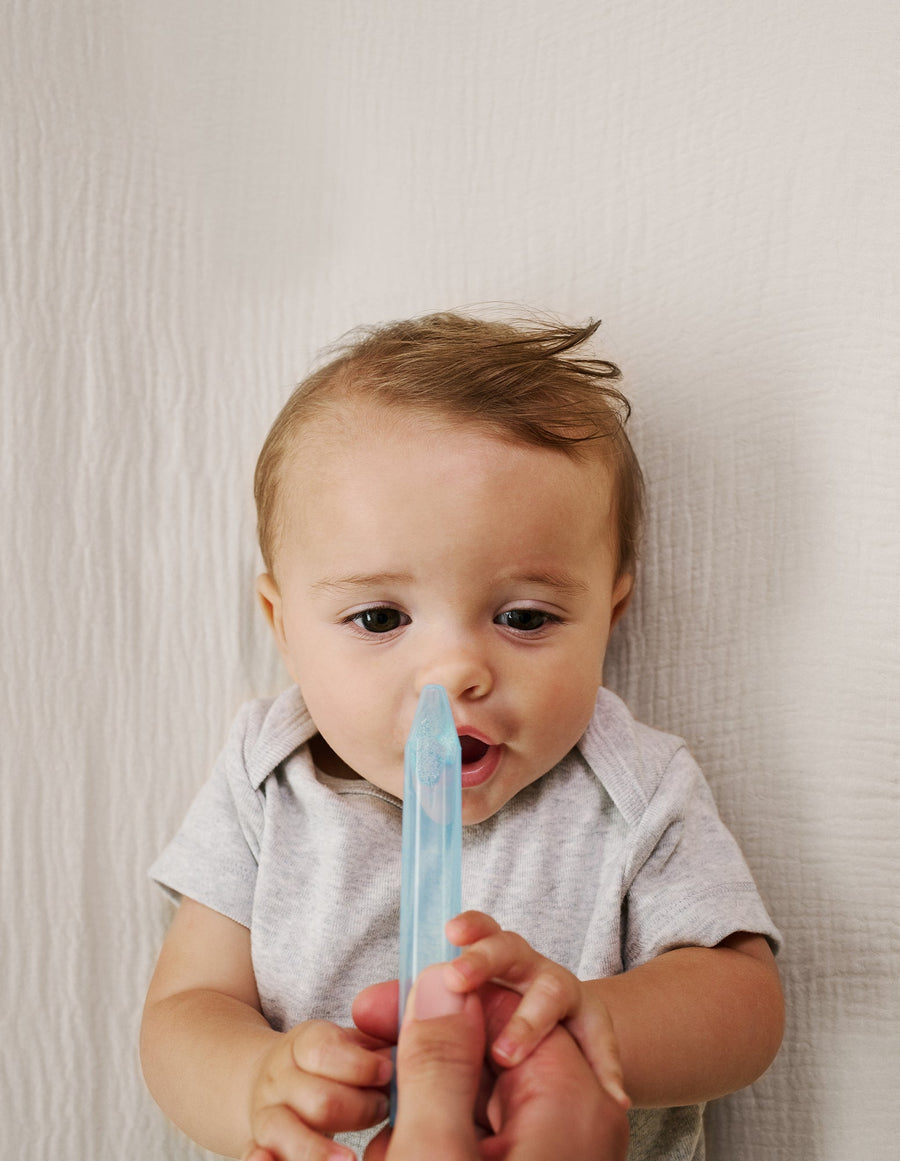
Once the mucus has loosened, a manual nasal aspirator such as the Frida Baby NoseFrida SnotSucker is designed to help remove nasal mucus. The parent controls the suction, allowing them to be gentle and responsive to their baby's comfort.
The disposable hygiene filter is designed to help stop mucus travelling through the tube, which helps address one of the biggest concerns first-time parents often have.
The aim isn't to remove every bit of mucus. It's simply to help clear enough mucus so your baby can breathe through their nose more comfortably during feeds and sleep.
Why this approach often works better
Parents sometimes tell us they tried a nasal aspirator once and weren't impressed. Often, they skipped the first step. Using saline first can make a noticeable difference because you're helping loosen the mucus before trying to remove it. That's why the focus should always be on the two-step approach, not just the aspirator itself.
Common mistakes parents make
Going straight to suction
Without saline, thick mucus may be harder to remove. Starting with saline first often makes the process easier.
Trying to remove every bit of mucus
Your baby's nose naturally produces mucus. The goal isn't a perfectly clear nose. It's helping your baby feed, sleep and breathe more comfortably.
Using too much force
Gentle suction is all that's needed. If your baby becomes distressed, stop, comfort them and try again later if appropriate.
Forgetting to clean the aspirator
Always clean your nasal aspirator according to the manufacturer's instructions after each use so it's ready for next time.
What real parents often discover
One of the biggest themes in parenting communities is this: many parents don't realise they're supposed to use saline first. Once they do, they often say the process feels easier and more effective. Parents frequently describe moments like:
- "I thought the aspirator wasn't working until someone told me to use saline first."
- "Waiting a minute made a huge difference."
- "The second time was much easier because I knew what I was doing."
If that sounds familiar, you're certainly not alone. Learning as you go is part of parenting.
When should you use the two-step method?
You don't need to do it every time your baby has a sniffle. Consider using the two-step approach when congestion is making it harder for your baby to:
- feed comfortably
- settle for sleep
- breathe through their nose
- stay comfortable during a cold
If your baby seems comfortable, is feeding well and isn't bothered by a slightly runny nose, you may not need to intervene.
When to seek medical advice
A blocked nose is common during a cold, but seek medical advice promptly if your baby:
- is under three months old and has a fever
- has difficulty breathing
- is feeding very poorly
- has significantly fewer wet nappies
- becomes unusually sleepy or difficult to wake
- or you're worried about their symptoms
Supportive care at home is important, but it isn't a substitute for medical assessment when your baby is unwell.
Frequently asked questions
How long should I wait after using saline?
Follow the saline product's instructions. Many parents find that allowing a short moment for the saline to help loosen mucus before suctioning can be helpful.
Can I skip the saline?
You can, but thicker mucus may be more difficult to remove without loosening it first.
Does saline treat my baby's cold?
No. Saline helps moisten and loosen nasal mucus, but it does not treat or cure the virus causing the cold.
Can I use saline every day?
Always follow the directions provided with the saline product and speak with your healthcare professional if you have any questions.
Does the order really matter?
For many parents, yes. Using saline before gentle suction helps loosen and prepare the mucus, which can make it easier to remove.
What to remember
If your baby has a blocked nose, remember this simple routine: saline first. Then suction. It's a small change, but one that many parents wish they'd known sooner.
Rather than trying to remove thick mucus straight away, you're first helping loosen it, making gentle suction more effective and your baby more comfortable. Sometimes the most helpful parenting tips aren't the complicated ones. They're the simple ones that make everyday challenges just a little easier.