Baby Care Guides
Do Snot Suckers Really Work? What Parents Should Know
Wondering if a snot sucker really works? Learn how nasal aspirators help clear nasal mucus, when to use one safely and why they're a go-to tool for many parents during cold and flu season.
Short answer? Yes, but probably not for the reason you think.
If you've found yourself Googling "Do snot suckers really work?" while your baby sounds like a tiny, congested walrus at 2am, you're certainly not alone. It's one of the most common questions parents ask during cold and flu season. Usually followed by:
- Are they worth buying?
- Do they hurt babies?
- Isn't it... a bit gross?
- Why wouldn't I just use a bulb syringe?
If you're asking these questions, you're in good company. The truth is that there's a lot of conflicting advice online. Some parents swear by them. Others aren't convinced. And if you've never used one before, it's completely understandable to be sceptical. So, let's separate fact from fiction.
A snot sucker (also called a nasal aspirator) isn't designed to treat or cure your baby's cold. It's designed to help remove nasal mucus from babies who can't blow their own nose yet. For many families, that simple difference can make feeding, sleeping and settling a little easier while a cold runs its course.
Why do parents even start looking for a snot sucker?
Here's something interesting. Parents rarely wake up thinking "I should buy a nasal aspirator." Instead, they're searching because they're trying to solve a problem. Usually it's one of these:
- "My baby won't feed because their nose is blocked."
- "My baby sounds so congested."
- "Why won't my baby sleep?"
- "How do I unblock my baby's nose?"
The product isn't what they're really looking for. They're looking for reassurance, and something that genuinely helps.
Nobody told me babies can't blow their own nose
Before becoming a parent, most of us never think about how often we clear our own nose. We sniff. We blow our nose. We wipe it. Babies can't do any of those things.
In fact, most children don't learn to blow their nose properly until they're around two to four years old. Until then, mucus simply stays inside those tiny nasal passages unless it naturally drains or someone helps remove it.
That's why even an ordinary cold can leave babies sounding surprisingly congested. It's not necessarily because they're producing more mucus. It's because they have:
- very small nasal passages
- no way of clearing them themselves
- and they naturally breathe through their nose while feeding.
So... do snot suckers actually work?
Yes. If your baby's nose contains loosened mucus, a nasal aspirator is designed to help remove it. That's exactly what it's made for.
What it doesn't do is:
- treat a cold
- cure congestion
- shorten an illness
- stop mucus coming back
Those are important differences. Think of it like using a tissue. Blowing your nose doesn't cure a cold. It simply helps you feel more comfortable. A nasal aspirator works in much the same way, except babies need someone else to do the job for them.
What real parents say
Spend a few minutes reading parenting forums and you'll quickly notice something. Almost every parent starts with doubts. Then, after using a nasal aspirator for the first time, many say they wish they'd tried it sooner. Common comments include things like:
- "I honestly thought it looked disgusting... until my baby fed properly afterwards."
- "I didn't expect much to come out, but I couldn't believe how much mucus was actually there."
- "The crying lasted about 30 seconds. The better sleep afterwards lasted much longer."
- "Using saline first made all the difference. I had no idea you were supposed to do that."
Just as common are questions like:
- "Am I doing it properly?"
- "Can I hurt my baby?"
- "Why isn't anything coming out?"
- "How often should I use it?"
If you've asked any of these questions yourself, you're not alone.
The biggest secret? It isn't the aspirator
It's the two-step method. One of the biggest mistakes parents make is trying to suction thick mucus immediately. Instead, think of it as a simple process.
Step 1: saline
Saline helps loosen and moisten thick nasal mucus. Giving it a minute to work can make removing mucus much easier.
Step 2: gentle suction
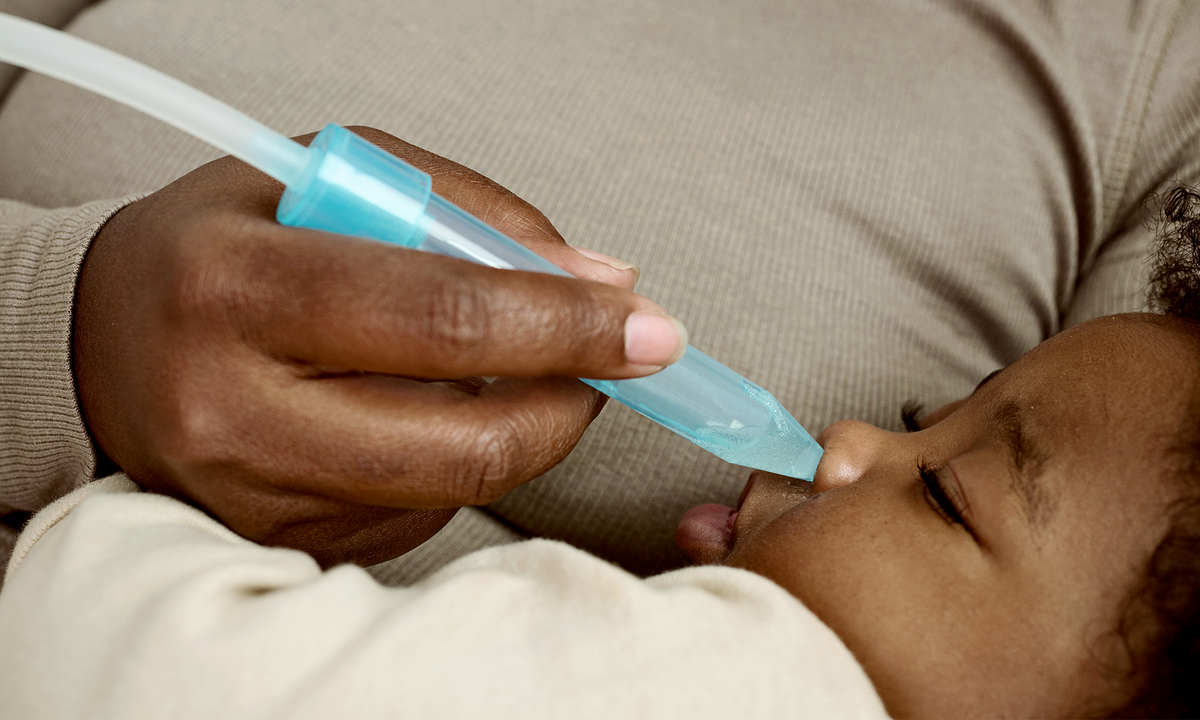
Once the mucus has loosened, use gentle suction to help remove it. This is where a manual nasal aspirator such as NoseFrida is designed to help. Rather than trying to remove thick, sticky mucus, you're helping remove mucus that's already loosened. Sometimes it's that simple change in technique that makes the biggest difference.
Want to learn exactly how to do it? Read our guide: How to clear your baby's blocked nose safely.
Snot sucker vs bulb syringe
Parents often ask whether there's any real difference. Here's a simple comparison:
Bulb syringe
- Fixed suction
- Can be difficult to clean thoroughly
- Compresses before use
- Often included in newborn kits
NoseFrida manual nasal aspirator
- Parent controls suction
- Components are designed to be cleaned according to the manufacturer's instructions
- Continuous, parent-controlled suction
- Specifically designed to help remove nasal mucus
Neither option is "right" or "wrong." Many parents simply prefer having more control over the amount of suction they're using.
Does it hurt?
This is probably the biggest concern parents have. If a baby cries while using a nasal aspirator, it's easy to assume it must be painful. Many babies simply don't enjoy having their face or nose touched. Think about cleaning food off a toddler's face. Many protest, even though it isn't hurting them.
Parents often say something like: "She hated me doing it... but she fed properly straight afterwards." Using a gentle technique, taking your time and stopping if your baby becomes distressed can help make the experience easier for everyone.
Isn't it... gross?
Let's address the elephant in the room. Almost everyone thinks this before using one. "Wait... how does that actually work?"
The NoseFrida SnotSucker includes a disposable hygiene filter designed to help stop mucus travelling through the tube. So, despite what most parents imagine beforehand... no. Nothing should end up where you're imagining. It's one of the biggest misconceptions about manual nasal aspirators.
When should you use one?
You don't need to clear your baby's nose every time they sniffle. Instead, consider it when congestion is making it harder for them to:
- feed comfortably
- settle to sleep
- breathe through their nose
- stay comfortable during a cold
The goal isn't a perfectly clear nose. It's simply helping your baby feel more comfortable.
What if nothing comes out?
This is another common question. It doesn't necessarily mean you're doing anything wrong. Possible reasons include:
- there isn't much mucus present
- the mucus hasn't loosened yet
- congestion is caused by swollen nasal tissues rather than visible mucus
Using saline first often helps.
What health professionals focus on
When babies have a common cold, healthcare professionals generally recommend supportive care. That means helping keep your baby comfortable while the illness runs its natural course. Supportive care may include:
- offering regular feeds
- allowing plenty of rest
- helping clear nasal mucus when congestion is affecting feeding or comfort
- knowing when it's time to seek medical advice
A nasal aspirator is one part of supportive care. It isn't a treatment for the virus itself.
When should you see a doctor?
Seek medical advice promptly if your baby:
- has difficulty breathing
- is under three months old and has a fever
- is feeding very poorly
- has significantly fewer wet nappies
- seems unusually sleepy
- is becoming more unwell rather than improving
- or if you're worried at any stage
You know your baby best. Trust your instincts.
Frequently asked questions
Can I use a snot sucker on a newborn?
The NoseFrida is suitable from birth. Always follow the manufacturer's instructions and seek medical advice if you're unsure.
How often should I use a snot sucker?
Only use it when congestion is affecting feeding, comfort or sleep, or as advised by your healthcare professional.
Why isn't anything coming out?
Try using saline first and give it a minute to help loosen the mucus before suctioning.
My baby cries every time. Is that normal?
Many babies dislike having their nose touched. The process is usually brief, and parents often find their baby settles more easily afterwards.
Can a snot sucker cure a cold?
No. A nasal aspirator is designed to help remove nasal mucus. It doesn't treat or cure the virus causing the cold.
What to remember
If there's one thing to remember, it's this: a snot sucker isn't designed to treat your baby's cold; it simply helps clear the nasal mucus that's making them uncomfortable.
For babies who can't yet blow their own nose, that small step can make feeding easier, settling more comfortable and those long winter nights feel a little more manageable. Like so many things in early parenthood, it often sounds unusual... until you need it. And if there's one sentiment shared by parents time and time again, it's this: "I wish I'd known about it sooner."