Pregnancy Guides
Vaginal birth or caesarean: preparing for either recovery
You may not know which kind of birth you will have until the day. Here is how recovery differs after a vaginal birth and a caesarean, what is the same, and how to be ready for either.

Around one in three births in Australia is by caesarean, according to the Australian Institute of Health and Welfare, and many of those were not planned. So the honest way to prepare for recovery is to prepare for both: a vaginal birth and a caesarean. The good news is that most of what you need overlaps, and the differences are easy to cover with a few extra items.
At a glance
- Bleeding, afterpains and the first bathroom visits happen after every birth.
- Vaginal birth recovery centres on the perineum; caesarean recovery centres on the incision and on moving carefully.
- The same core supplies cover both. Add high-waisted underwear and a pillow for a caesarean.
- Your midwife or obstetrician is the right person for anything specific to your body.
What is the same after any birth
Whatever the birth, the uterus sheds its lining over the following weeks. This is called lochia, and it is heavier than a period at first, then tapers and changes colour over four to six weeks. Afterpains, the cramping as the uterus contracts back down, are common and often stronger during feeds. Night sweats, hormone shifts, and the general exhaustion of caring for a newborn arrive either way.
Practically, that means every recovery needs the same base: thick maternity pads, disposable underwear that holds them in place, a peri bottle for warm-water rinsing after every toilet visit, and a routine that continues at home. The fourth trimester planning guide covers how to set that up before 36 weeks.
Recovering from a vaginal birth
After a vaginal birth the perineum, the area between the vaginal opening and the anus, is often sore and swollen, and sometimes stitched after a tear or an episiotomy. Both are common, and recovery takes time.
The first bathroom visit is the moment most people say they were least prepared for. Warm-water rinsing with a peri bottle instead of wiping, cooling pads worn inside disposable underwear, sitting on a soft surface, and short walks rather than long ones are the basics midwives most often suggest. Ask your midwife about pain relief and about your pelvic floor before you leave hospital.
Recovering from a caesarean
A caesarean is major abdominal surgery, and the recovery reflects that. Expect three to five days in hospital, tenderness around the incision for weeks, and advice to avoid heavy lifting for around six weeks. Driving is something to discuss with your doctor and your insurer.
The practical differences are about the incision and about moving. Underwear and clothing need to sit well above the wound. A firm pillow held against the abdomen makes coughing, laughing and getting up far more comfortable. Constipation is common after surgery, so ask your GP or pharmacist about a stool softener before you go in. Lochia still happens, so the pads and peri bottle still matter.
| Vaginal birth | Caesarean | |
|---|---|---|
| Hospital stay | Often one to two days | Often three to five days |
| Main site of recovery | Perineum | Incision and abdomen |
| Underwear | Boyshort or high waist | High waist, above the incision |
| Bleeding | Yes, four to six weeks | Yes, often slightly lighter |
| Lifting and driving | Ease back in gradually | Limits for around six weeks, check with your doctor |
| Pelvic floor | Physio at two to six weeks | Physio still worthwhile, pregnancy affects the pelvic floor too |
Packing for either outcome
Because you may not know until the day, pack for both. Start with the shared base and add the caesarean items; if you do not need them, they cost you very little bag space.
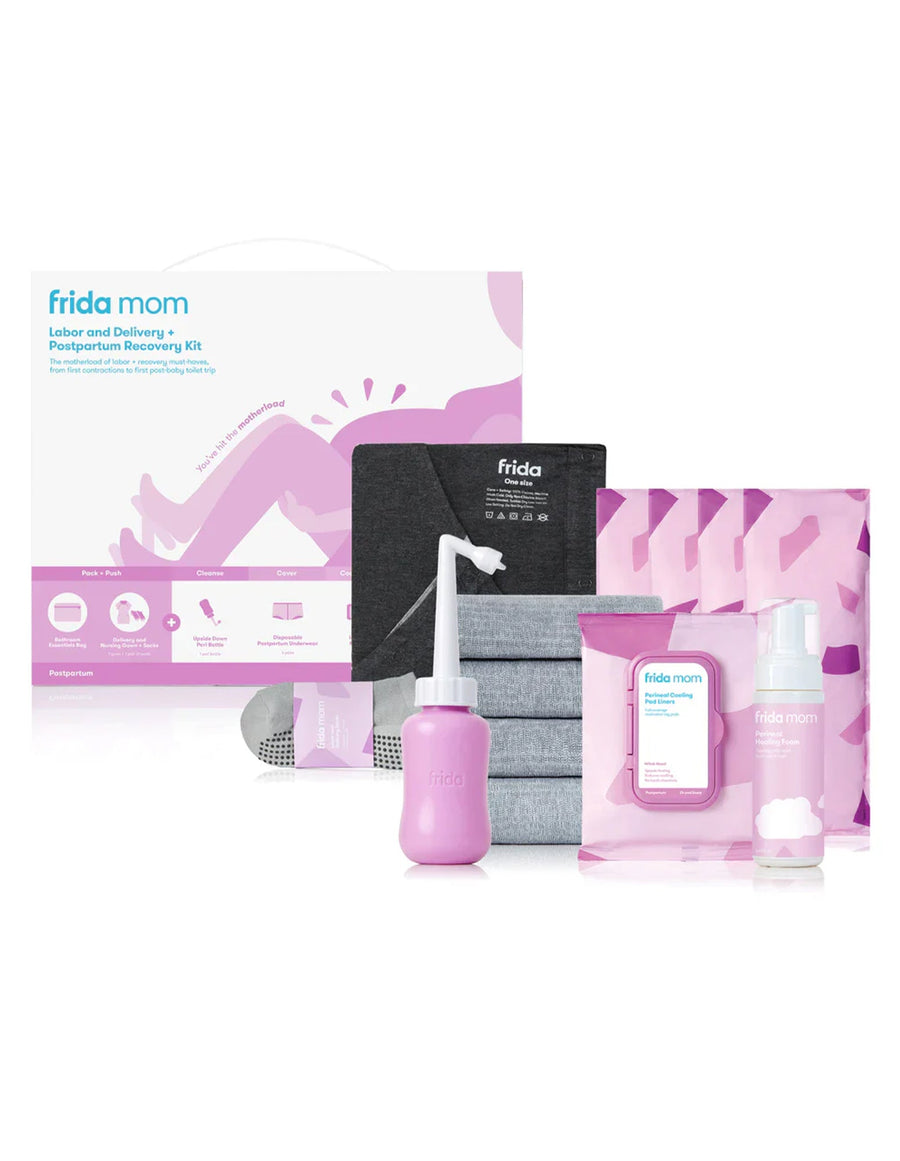
- Shared base: peri bottle, maternity pads, disposable underwear, cooling pads and liners, perineal foam, a caddy to keep it all together.
- Add for a caesarean: high-waisted underwear, loose high-waisted clothing, a firm pillow, and the stool softener conversation with your GP.
- Add for a vaginal birth: nothing extra, the shared base is designed for it. A donut cushion is optional and a matter of preference.

When to seek help
Call your midwife, 13 HEALTH or 000 if you notice
Soaking more than one pad an hour for two hours, clots larger than a 50-cent coin, fever, increasing pain, redness or discharge at the incision or any wound, calf pain or swelling, chest pain or shortness of breath, or dizziness with heavy bleeding. Perinatal Anxiety and Depression Australia (PANDA) is on 1300 726 306 if you are not feeling like yourself.
Frequently asked questions
Do you bleed after a caesarean?
How long does caesarean recovery take?
Is a peri bottle useful after a caesarean?
Which underwear is better after birth?
Do I still need a pelvic floor physio after a caesarean?
How soon can I shower after a caesarean?
What can I do now to prepare my body?

The Frida Mom Postpartum Recovery Kit covers the underwear, ice pads, liners, foam and caddy from the shared base above, with the Upside Down Peri Bottle sold separately and high-waisted disposable underwear available if a caesarean is possible. Designed for recovery at home after either kind of birth.