Baby Care Guides
NoseFrida vs electric nasal aspirators: which is better for your baby?
Every parent of a snuffly newborn ends up in the same aisle, holding a manual nasal aspirator in one hand and a battery-powered one in the other. Both promise a clearer nose before the next feed. They get there in quite different ways, and the differences matter more than the packaging suggests.
This guide compares the NoseFrida with electric nasal aspirators on the things that actually decide it in real life: how the suction works, hygiene, cleaning, noise, cost over the first year and what Australian parents tend to reach for at 3am. It is written for parents in Australia, and it is not a substitute for advice from your GP or child health nurse.
Why a blocked nose matters so much in babies
Babies breathe mainly through the nose for roughly the first few months, and they cannot blow it. A blocked nose therefore shows up as trouble feeding, broken sleep and a very unhappy baby well before it looks like a cold. Clearing the nose before a feed and before sleep is the practical goal, and both types of aspirator are designed for that job.
Whatever you use, the routine is the same: saline drops first to thin the mucus, wait 20 to 30 seconds, then suction. Suction on a dry nose does very little and is more uncomfortable for the baby.
How the two types work
NoseFrida (manual, parent-powered)
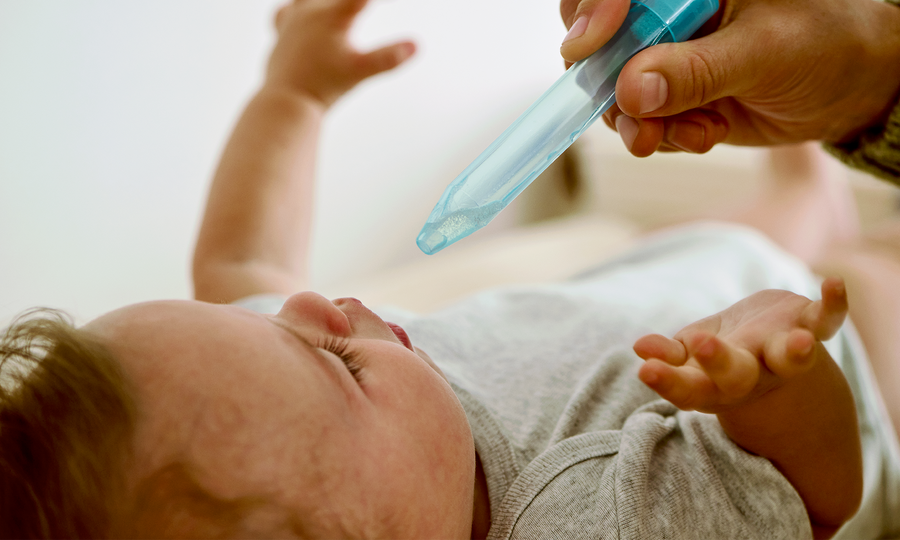
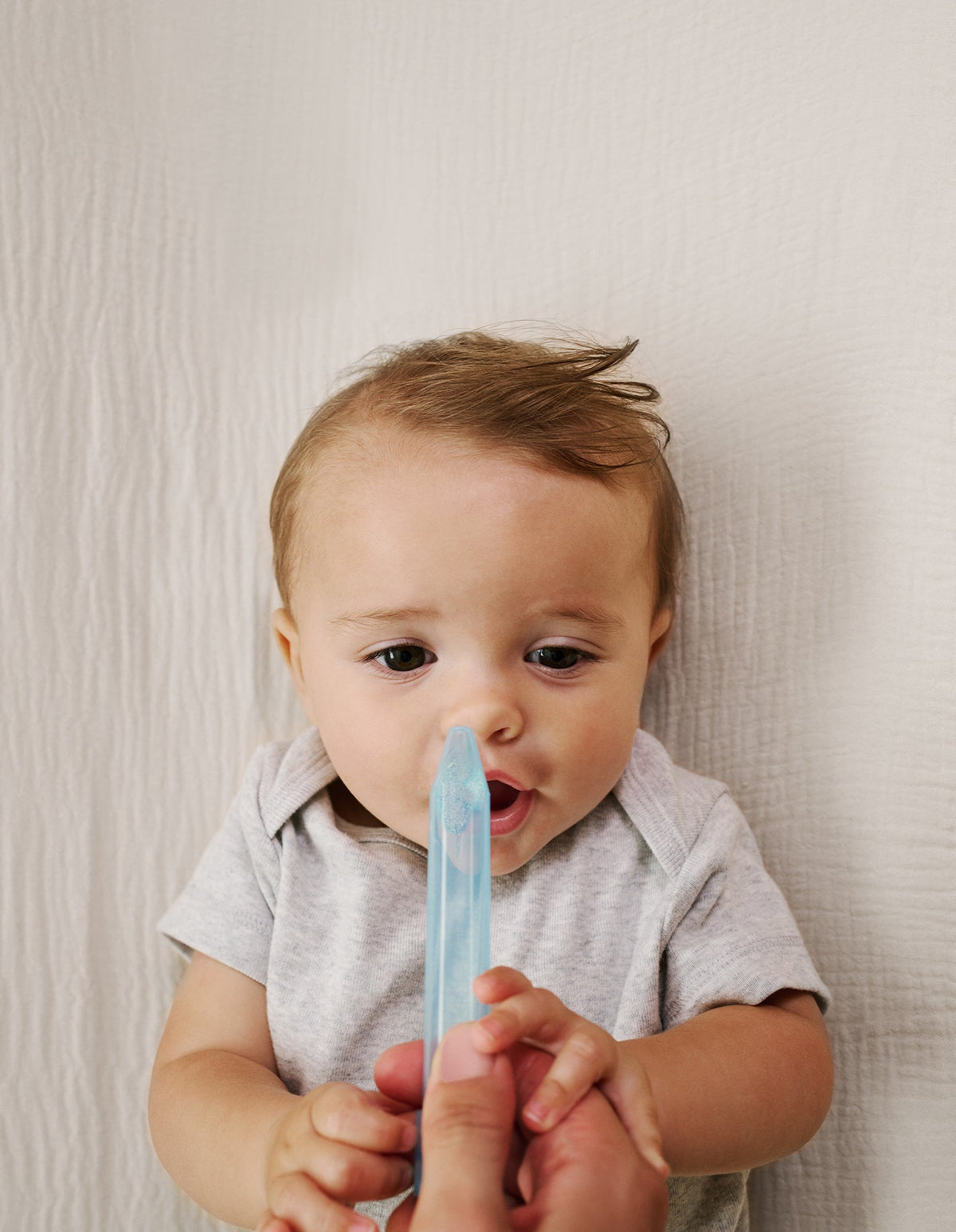
A wide tube rests against the outside of the nostril, a long hose runs to a mouthpiece, and the parent provides the suction by breathing in. A single-use hygiene filter sits between the mucus chamber and the mouthpiece. Nothing goes inside the nostril, and you control the strength moment by moment.
Electric aspirator (battery-powered)
A motor creates the suction. A silicone tip sits at or just inside the nostril, and mucus collects in a small chamber in the handset. Most models offer two or three fixed suction levels, and some play music or have lights to distract the baby.
Suction: control versus convenience
This is the biggest practical difference. With the NoseFrida you feel the resistance and adjust instantly: a gentle draw for a stuffy newborn, a firmer one for thick mucus at the end of a cold. Parents often describe it as the first time they understood how much was actually in there.
Electric aspirators give you a set level and hold it. That is convenient with one hand at 3am, but the suction on many consumer models is modest, and thick mucus can defeat them. Reviews of electric units are consistently split between parents who find them brilliant for thin, watery congestion and parents who found they simply did not shift the thick stuff.
Worth knowing
Suction strength is not the same as effectiveness. What clears a nose is thin mucus plus a good seal at the nostril. Saline does the first part; the shape of the tip does the second. The NoseFrida's wide tube seals against the outside of the nostril, which is why it works without going inside.
Hygiene and cleaning
Electric aspirators collect mucus in a chamber with a valve, tip and often a small tube. All of those parts need to come apart and be washed after every use, and the motor unit itself cannot be submerged. Mucus that dries inside a valve is the most common reason electric units lose suction over time.
The NoseFrida has three washable parts: the tube, the hose and the mouthpiece. They rinse under warm soapy water, and the hygiene filter is thrown away after each use. The filter is the piece parents ask about most. It is there so that nothing travels up the hose, and it should be replaced every time. A pack of replacement filters is the ongoing cost.
Noise, batteries and the 3am factor
Electric aspirators hum. Some babies do not mind; some react to the noise more than to the suction. Batteries also run down, usually mid-cold, and rechargeable models need to be somewhere near a charger. The NoseFrida is silent and needs nothing but a filter.
On the other hand, an electric unit is genuinely one-handed, which matters if you are holding a baby on your own. The NoseFrida works best with the baby lying back or held upright against you, with one hand steadying the head.
Cost over the first year
The NoseFrida is $23.99 and comes with a starter supply of filters. Replacement hygiene filters are $11.99 a pack. Electric aspirators in Australia range from around $40 for basic battery models to well over $100 for rechargeable ones, and most need replacement tips or a new unit if the motor fails. Over a first winter of childcare colds, the manual option is usually the cheaper one, filters included.
What about the bulb syringe?
The blue rubber bulb is the oldest option and the one many hospitals hand out. It is cheap and quiet, but the tip goes inside the nostril, the suction is weak and hard to judge, and the inside of the bulb cannot be properly cleaned or dried. For most families it is a stopgap rather than the tool they keep using.
Which one should you choose?
At a glance
Choose the NoseFrida if you want control over suction, a tool that copes with thick mucus, no batteries and parts you can wash properly. It is also the option most Australian midwives and child health nurses are familiar with.
Choose an electric aspirator if you need it strictly one-handed, your baby has mostly thin congestion, and you are happy to strip and wash the chamber and valve after every use.
Either way, use saline first, clear before feeds and sleep rather than on a schedule, and stop if the nostril looks red or irritated.
If congestion comes with a fever, fast or noisy breathing, feeding refusal, fewer wet nappies or a baby under three months who seems unwell, see your GP or call 13 HEALTH in your state. A blocked nose is common; a baby who is working hard to breathe is not something to manage at home.
Frequently asked questions
Is the NoseFrida better than an electric nasal aspirator?
For thick mucus and control over suction, most parents find the manual NoseFrida more effective. Electric aspirators win on one-handed convenience. Both work best after saline drops.
Can mucus really travel up the NoseFrida tube into your mouth?
No. The single-use hygiene filter sits between the collection chamber and the mouthpiece and stops mucus and droplets travelling up the hose. Replace the filter every use.
How often can I use a nasal aspirator on my baby?
Use it when the blockage is getting in the way, typically before feeds and sleep, rather than on a timetable. Two to four times a day is common during a cold. If the nostrils look red or sore, give it a rest and speak to your child health nurse.
From what age can you use the NoseFrida?
From birth. The tube rests against the outside of the nostril rather than going inside, which is what makes it suitable for newborns.
Do I need saline drops as well?
Yes, with any aspirator. Two to three drops of saline in each nostril, a 20 to 30 second wait, then suction. Dry mucus does not move.
How do I clean an electric nasal aspirator?
Take the tip, collection chamber and valve off the handset after every use and wash them in warm soapy water, then air-dry fully before reassembling. The motor unit is wiped, not submerged. Dried mucus in the valve is the usual cause of lost suction.
When should I see a doctor about my baby's blocked nose?
See your GP promptly if there is a fever in a baby under three months, fast or laboured breathing, feeding refusal, fewer wet nappies, or a cold that is not improving after ten days. Call 000 if your baby is struggling to breathe.
If you are weighing it up, the NoseFrida nasal aspirator is $23.99 with filters included, and our step-by-step NoseFrida guide walks through the saline-then-suction routine with pictures.