Pregnancy Guides
Frida Mom kit vs packing your own: what a DIY postpartum kit really costs
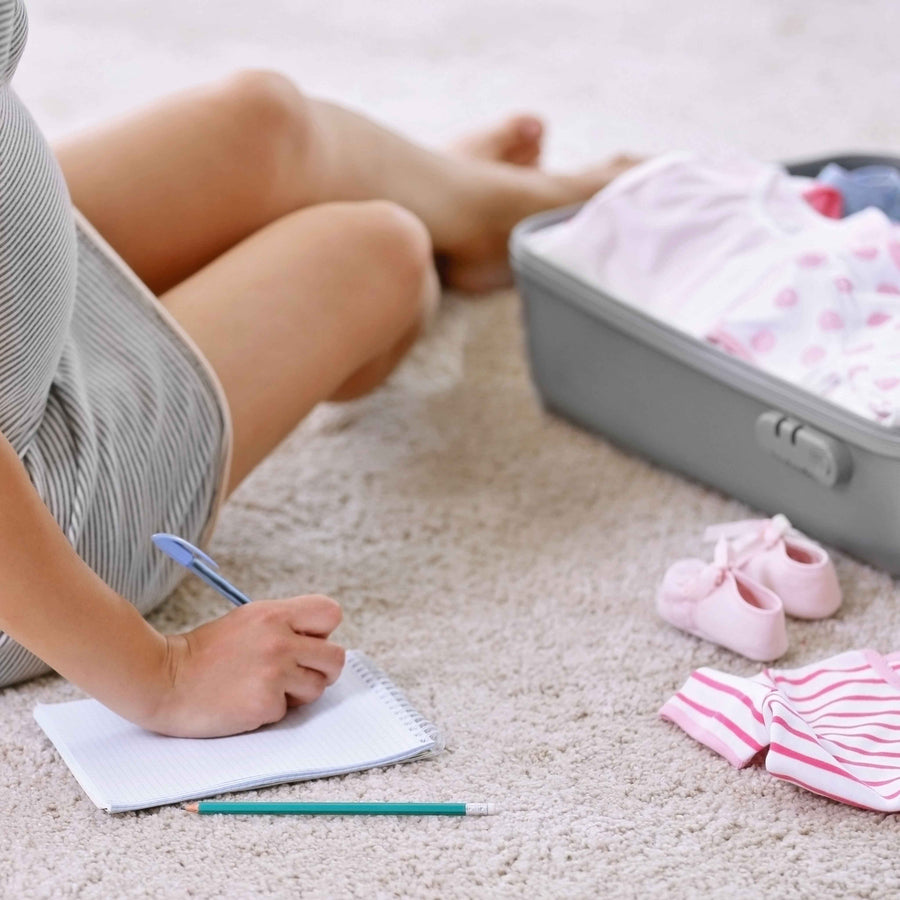
Somewhere around 32 weeks, the hospital bag research turns into a spreadsheet. On one side, a ready-made postpartum kit. On the other, a list of pharmacy items that might add up to the same thing for less. It is a fair question, and the answer depends on what you value: money, time, or not having to think about it in the first week.
This guide lays out what is in the Frida Mom kits, what the do-it-yourself version looks like in Australia, where each option wins, and the questions to ask before you decide. It is written for Australian mums and is not a substitute for advice from your midwife or GP about your own recovery.
What the first week actually needs
Strip away the branding and Australian postnatal advice comes down to five things for the days after a vaginal birth, most of which also apply after a caesarean: rinse with warm water instead of wiping, keep something cold on swelling in the first day or two, absorb the bleeding, add something soothing, and wear underwear that holds it all in place without pressure on stitches or an incision.
Any kit, bought or assembled, is just a way of having those five things ready before you need them. The comparison is about how well each option does that, and at what cost.
What is in the Frida Mom kits
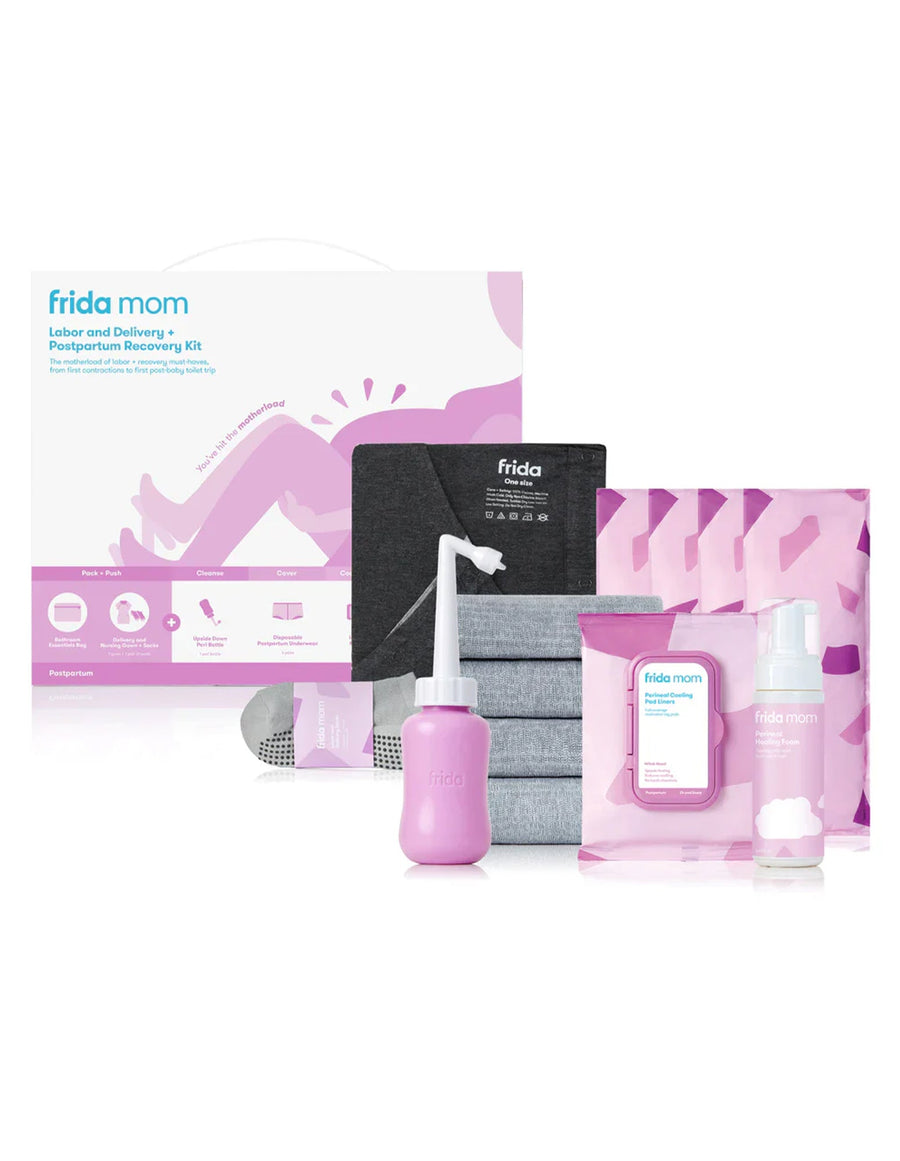
Postpartum Recovery Kit, $149.99
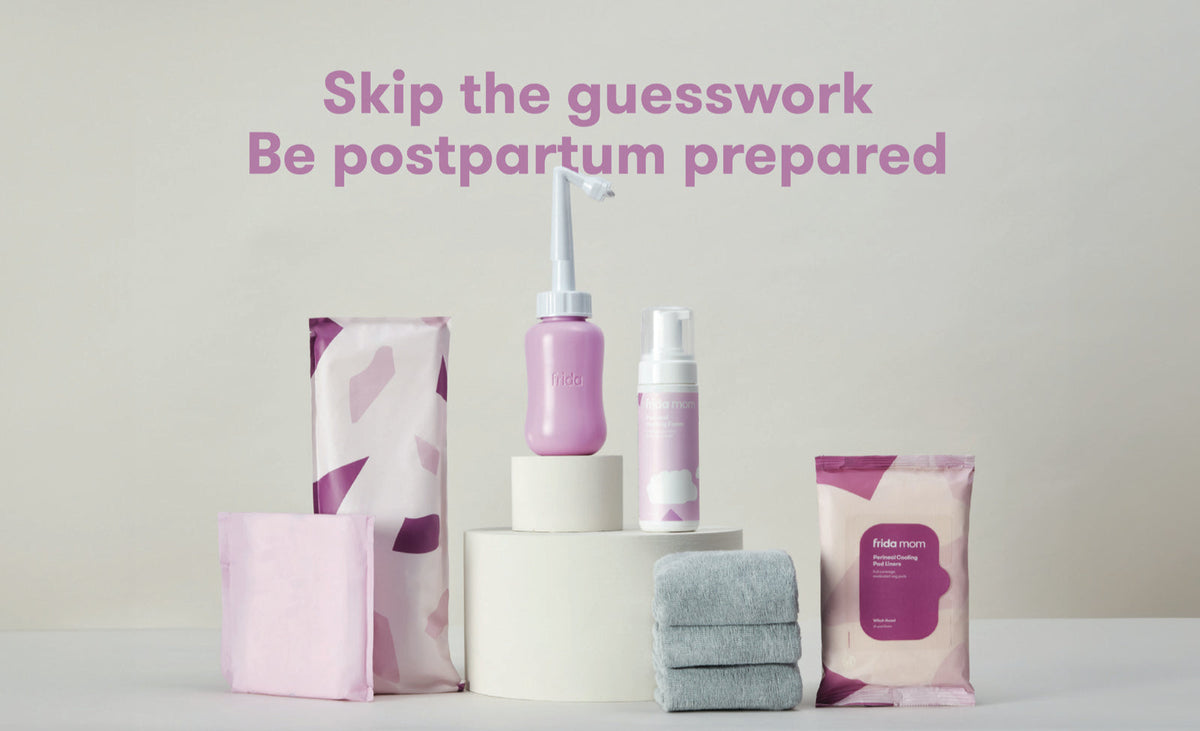
High-waist disposable underwear, Instant Ice Maxi Pads that activate when bent (no freezer needed), witch hazel cooling liners that sit across the whole pad, Perineal Foam applied to the liner, and a caddy that keeps it all within reach on the cistern. The peri bottle is sold separately.
Hospital Labour & Delivery Kit, $279.99
Everything in the Recovery Kit, plus the Upside Down Peri Bottle, a front-opening labour gown with snap shoulders, non-slip labour socks and a toiletry carry bag that drops straight into the hospital bag.
Bought on their own, the pieces are $27.99 for the peri bottle, $42.99 for high-waist underwear, $59.99 for the ice pads, $32.99 for the liners and $34.99 for the foam. Quantities inside each kit are listed on the product pages, so compare like with like.
What the DIY version looks like
You can assemble a reasonable first-week kit from an Australian pharmacy and supermarket. The pieces, and the trade-offs, look like this.
The DIY list
Peri bottle: a basic squeeze bottle from a pharmacy or online. Cheaper, but the straight nozzle means aiming upward from a seated position, which is exactly the movement that is hardest in the first days.
Cold: a gel pack from the freezer wrapped in a cloth, or a frozen wet pad. Works at home. Does not work on a postnatal ward with no freezer, which is where the first 48 hours happen.
Absorb: supermarket maternity pads. Inexpensive and widely available. You will need a lot of them in the first week.
Soothe: witch hazel from the pharmacy, dabbed on a pad. Cheap, though messier and fiddlier than a liner, and not every pharmacy stocks pre-soaked pads.
Underwear: old cotton briefs a size up, or the mesh knickers if your hospital happens to supply them. Free, but they need washing at a time when laundry is the last thing you want, and a low waistband sits directly on a caesarean incision.
Gown and socks: an oversized front-opening shirt and thick socks you already own.
Where DIY wins
Price, if you already own half of it. If you have a gown-like shirt, socks, and are recovering at home after a straightforward birth with a freezer three steps away, the DIY route can cost well under $100 and do the job. It is also easy to top up: pads and witch hazel are a supermarket run, not an online order.
Where the kit wins
Three places. First, the hospital: ice pads that activate without a freezer and a caddy that sits on the cistern solve the ward problem the DIY version cannot. Second, the design details that only matter once you are the one sitting down: the angled peri bottle, liners that cover the whole pad, foam that means no wiping, and underwear that sits above an incision. Third, timing. Everything arrives in one box before the birth, packed and ready, rather than assembled across three shops at 36 weeks or, worse, sent for afterwards.
The honest middle ground
Plenty of families do both: the Recovery Kit or the Labour & Delivery Kit for the hospital and the first week, then supermarket maternity pads and a big pack of cheap cotton briefs for weeks two to six, when bleeding is lighter and comfort matters less than convenience.
Questions to ask before you decide
Where will the first 48 hours happen?
On a ward, the no-freezer ice pads and the caddy earn their keep. At home after an early discharge or a homebirth, the freezer option is realistic.
Vaginal birth or caesarean?
After a caesarean, the waistband question decides it: high-waist underwear that sits above the incision is worth having, whichever route you take.
Who is doing the shopping?
If it is you, at 36 weeks, one box is a real advantage. If a partner or parent is happy to do the pharmacy run and the laundry, DIY is more workable.
Do you already own a gown and peri bottle?
Then the Recovery Kit is the one to compare against DIY, not the full Labour & Delivery Kit.
Whichever you choose, pack it by 34 to 36 weeks, and talk to your midwife about what your recovery is likely to involve. If pain, bleeding or a wound is getting worse rather than better in the weeks after birth, contact your midwife, the maternity ward or your GP.
Frequently asked questions
Is the Frida Mom kit worth it?
For a hospital birth, the no-freezer ice pads, angled peri bottle and one-box convenience are what you are paying for. If you are recovering at home with a freezer nearby and already own most of the pieces, a DIY kit can do the job for less.
What is the difference between the Recovery Kit and the Labour & Delivery Kit?
The Labour & Delivery Kit is the Recovery Kit plus the Upside Down Peri Bottle, a labour gown, labour socks and a toiletry carry bag. Choose it if you are packing a hospital bag; choose the Recovery Kit if you already have a gown and a peri bottle.
Can I use a normal water bottle instead of a peri bottle?
A squeeze bottle with a nozzle is what makes rinsing while seated possible. A standard water bottle pours rather than sprays and needs to be tipped from above. An angled nozzle is easier again because you do not need to reach underneath.
Do I need a postpartum kit for a caesarean?
You still bleed after a caesarean, so pads and comfortable underwear are needed. The main difference is the waistband: choose high-waist underwear that sits above the incision. Ice pads and the peri bottle are less central after a caesarean but many women still use them.
How many pairs of disposable underwear do I need?
Most women use disposable underwear for the first five to ten days, changing once or twice a day, then switch to soft cotton briefs. Two to three packs for the first week is common, more after a caesarean.
When should I buy my postpartum kit?
By 34 to 36 weeks, so it is packed with the hospital bag rather than in transit. Around a quarter of Australian babies arrive before 39 weeks.
What do Australian hospitals provide for postpartum recovery?
Usually a small supply of maternity pads and, in some units, ice packs on the ward. Disposable underwear, liners, foam and a peri bottle to take home are not standard. Our guide to what hospitals provide covers this in detail.
If you decide on the kit route, the Postpartum Recovery Kit covers the bathroom routine for recovery at home, and the Hospital Labour & Delivery Kit adds the gown, socks and peri bottle for the hospital bag. Read what Australian hospitals give you after birth before you finalise the list.