Postpartum Guides
Postpartum Disposable Underwear: Is It Worth It and How Many Do You Need?
Wondering if postpartum disposable underwear is worth it? Here's what it actually does, how many to pack, and whether it beats the alternatives.
Quick Answer
Yes, postpartum disposable underwear is worth it for most new mums, especially in the first week after birth. It gives you a comfortable, no-fuss base layer that holds a maternity pad in place while protecting your own underwear from the heavy bleeding and discharge that's completely normal in the days after delivery.
That said, it is not a must-have for everyone. If you already own several pairs of cheap, stretchy cotton underwear you do not mind staining, you can work with those instead. This article breaks down exactly what to expect, who benefits most, and how to decide before you pack your hospital bag.
At a Glance
- Best for: Mums who have had a vaginal birth, a caesarean, or anyone who wants a disposable, worry-free option for the first 7 to 10 days postpartum
- Not ideal for: Mums who prefer reusable options from day one, or who have very light postpartum bleeding
- Key strength: Soft, stretchy fit that sits comfortably over a perineal pad or c-section incision without digging in
- Trade-off: Ongoing cost if you use them beyond the first two weeks; not as eco-friendly as reusable alternatives
What Actually Happens After Birth (And Why Underwear Matters)
After delivery, your body sheds the uterine lining through a discharge called lochia. It starts as a heavy, red bleed in the first few days, gradually lightening to a pinkish or brownish discharge over two to six weeks. Most mums find the first five to seven days the heaviest, and it can be unpredictable, especially when you stand up after feeding or get moving for the first time.
On top of that, your perineum may be sore and swollen whether or not you had a tear or stitches. A caesarean incision sits right where a waistband would normally sit. Regular underwear elastic can press, rub, and irritate at the exact moment you least need more discomfort. That is the problem disposable underwear is designed to solve.
As always, talk to your midwife or GP about what is normal for your recovery, especially if your bleeding suddenly gets heavier, changes colour unexpectedly, or you have concerns about your wound.
Why Many Mums Choose Disposable Underwear After Birth
1. Nothing to wash at 3am. In the early days, every decision costs energy. Throw-away underwear means one less thing to soak, pre-treat, and launder when you are already running on empty.
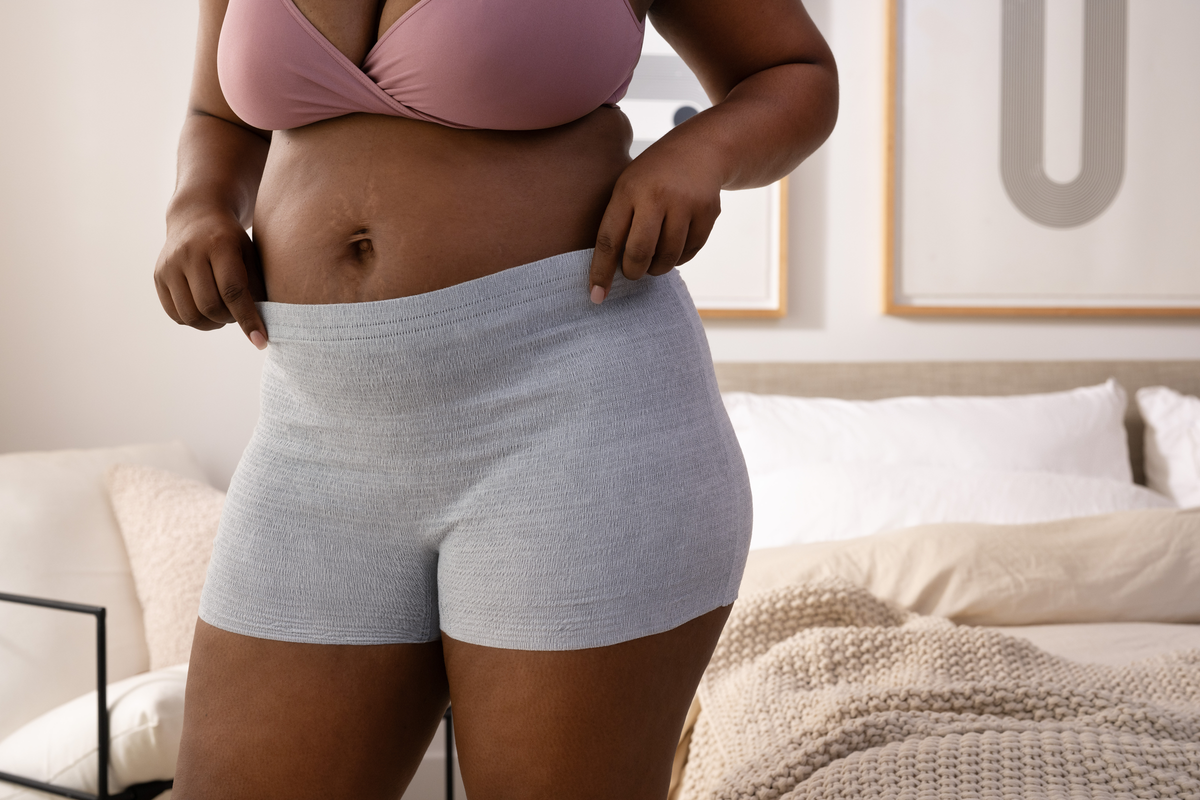
2. A soft, generous fit that does not dig in. Quality disposable pairs are made from a soft, mesh-style fabric that stretches in every direction. They sit high enough to clear a c-section incision and gently enough not to aggravate a sore perineum, without the waistband pressure of standard underwear.
3. They hold a pad securely in place. Postpartum pads are bulkier than regular period pads. A snug but gentle fit keeps the pad exactly where it needs to be, which matters when you are moving carefully, breastfeeding in odd positions, or shuffling to the bathroom at midnight.
4. You do not have to worry about ruining anything. The mental load of protecting your favourite underwear from heavy lochia is real. Disposables remove that entirely. Wear them, change them, done.
5. Easy to change in a hospital bed or unfamiliar bathroom. Hospital gowns, IV lines, and sore legs make getting changed more complicated than usual. Disposable pairs are lightweight and easy to pull on and off, often with tear-away sides for even easier access.
Honest Trade-Offs to Consider
Disposable underwear creates more waste than reusable alternatives. If sustainability is important to you, using a handful of cheap dark-coloured cotton pairs you are happy to stain is a perfectly valid choice.
Cost adds up if you continue using them past the first week or two. Most mums find they only need disposables for the heaviest phase of bleeding, then transition to regular underwear with a lighter pad or liner.
Fit varies between brands. Some are cut generously; others run small or have an uncomfortably scratchy waistband. It is worth checking the size range before you buy, particularly if you are buying for the end of pregnancy when sizing can feel uncertain.
Disposable Underwear vs. the Alternatives
| Option | Pros | Cons |
|---|---|---|
| Postpartum disposable underwear | No washing, soft fit, stress-free | Ongoing cost, more waste |
| Old/cheap cotton underwear | Free (already own them), reusable | May need soaking, less stretchy, elastic can irritate |
| Period underwear | Reusable, good absorbency | Needs washing between uses, may not hold a maternity pad as securely |
| Hospital-issued mesh underwear | Free in hospital, very gentle fit | Limited supply, not always available to take home |
How Many Should You Pack and Buy?
For your hospital bag, pack at least five to eight pairs. Most mums change underwear two to three times a day in the first couple of days, particularly if postpartum pads are leaking or they are doing pad changes alongside their midwife checks.
For the first two weeks at home, having around 14 to 20 pairs available gives you flexibility without over-buying. Some mums switch back to their own underwear after five days; others prefer disposables for the full first week or two. Buy enough to get you through comfortably, knowing you can always order more if you need them.
When Disposable Underwear Is Definitely the Right Call
- You had a vaginal birth with perineal stitches or swelling
- You had a caesarean and need a high-waist option that clears the incision
- You are packing a hospital bag and want zero-fuss recovery basics
- You do not want to think about laundry in the first week
- You have already used your good underwear and do not want to risk more
Is It Worth It?
For most mums, yes. The combination of softness, convenience, and zero mental load makes disposable underwear one of the more genuinely useful postpartum purchases, especially for the hospital stay and the first week at home. It is not glamorous, but it solves a real problem at a time when your body needs kindness and your brain does not need extra decisions.
If you are building your postpartum recovery kit, the Frida Mum Disposable Boyshort Underwear and High-Waist Underwear are both designed with the fourth trimester in mind: soft mesh fabric, a fit that works for both vaginal and caesarean recoveries, and enough stretch to sit comfortably over a bulky pad or tender incision. They pair well with Frida's Instant Ice Maxi Pads and Perineal Cooling Pad Liners if you want to put together a recovery kit before your due date.
FAQs
How long will I need postpartum disposable underwear?
Most mums use disposable underwear for the first five to ten days, which covers the heaviest phase of postpartum bleeding. After that, many transition back to their own underwear with a lighter pad or liner. Some prefer to keep using disposables for the full two weeks. It really depends on your flow and how you feel.
Can I use disposable underwear after a caesarean?
Yes. Look for a high-waist style that sits above the incision line rather than directly on it. A soft, stretch fabric also helps avoid rubbing on a sensitive wound. Check with your midwife or obstetrician about what to wear directly against your incision during the early healing phase.
How many pairs of disposable underwear should I pack in my hospital bag?
Pack five to seven pairs for your hospital stay. You may be changing two to three times a day in the first couple of days. If your stay is longer than average, or you want a buffer, pack a couple more. You can always leave extras in the bag unopened.
Is disposable underwear the same as mesh underwear?
Essentially, yes. The disposable underwear you buy from brands like Frida Mum is typically made from a soft mesh fabric, similar to what hospitals provide. The difference is that retail versions tend to be cut better, come in a wider size range, and are designed to hold a maternity pad more securely than the basic hospital-issued version.
Can I use period underwear instead of disposables?
You can, and some mums prefer the reusable option. The consideration is that early postpartum bleeding is typically much heavier than a regular period, so most mums still use a pad on top of period underwear rather than relying on the underwear alone for absorbency. You will also need to wash them between uses, which can feel like more effort in those early days.
What size postpartum underwear should I buy?
Many mums size up from their pre-pregnancy underwear size, especially in the first couple of days when swelling is at its peak. If you are buying before your due date, check the brand's size guide and choose based on your third-trimester measurements rather than your usual size. A generous fit is far more comfortable than one that digs in.
When should I stop using postpartum disposable underwear?
There is no fixed rule. Most mums move back to regular underwear once their lochia lightens to a point where a standard pad or liner is enough to manage it. For many, that is around the end of the first week to ten days. Listen to your body, and speak with your midwife if you are unsure whether your bleeding is lightening at the expected pace.
Do I actually need postpartum disposable underwear or is it just a marketing thing?
It is genuinely useful rather than just a trendy purchase, but it is not strictly essential. If you have a handful of cheap, large cotton underwear you do not mind staining, you can get through the postpartum period without buying disposables. That said, most mums who do buy them find they are glad they did, especially in the first few days when comfort and convenience matter a great deal.