Postpartum Guides
C-Section Recovery Week by Week: What to Expect in the First Six Weeks in Australia
Last reviewed: June 2025. Hospital stay lengths and activity guidance reflect current Australian clinical practice.
A c-section is major abdominal surgery. Seven layers of tissue are cut and repaired. The fact that you're simultaneously caring for a newborn immediately afterward — often on minimal sleep, in a hospital room, trying to establish feeding — doesn't change what your body has just been through.
About one in three Australian babies is born by caesarean section, making it one of the most commonly performed surgical procedures in the country. And yet c-section recovery is routinely underestimated — by new mums, by partners, and sometimes by the healthcare system itself. The "six-week clearance" is treated as a finish line when it's really just the point at which external healing is assessed. Internal healing takes considerably longer.
This guide gives you the honest, week-by-week account of what c-section recovery actually involves: what happens in hospital, what each week at home looks like, what you should and shouldn't be doing, what actually helps, and when to contact your GP. No minimising. No "you'll be back on your feet in no time." Just the accurate, practical information you deserve to have.
What a c-section actually involves — Understanding your recovery
A caesarean section involves incisions through seven distinct layers: skin, subcutaneous fat, the anterior rectus sheath (the connective tissue covering the abdominal muscles), the rectus abdominis muscles (separated rather than cut in most cases), the peritoneum (the membrane lining the abdominal cavity), the lower uterine segment, and the amniotic sac. Each of these layers is repaired after the baby is delivered.
Most Australian c-sections are performed under spinal or epidural anaesthetic, meaning you are awake during the procedure. General anaesthetic is used in emergency situations or when regional anaesthesia is not possible or effective.
The reason understanding this matters for recovery is simple: the incision you can see on the surface of your abdomen represents only the outermost layer. The internal layers — muscle, peritoneum, uterus — are healing simultaneously and invisibly. Feeling better on the outside is not the same as being healed on the inside. This distinction is the foundation of every piece of recovery advice in this guide.

The first 48 hours — What happens in hospital

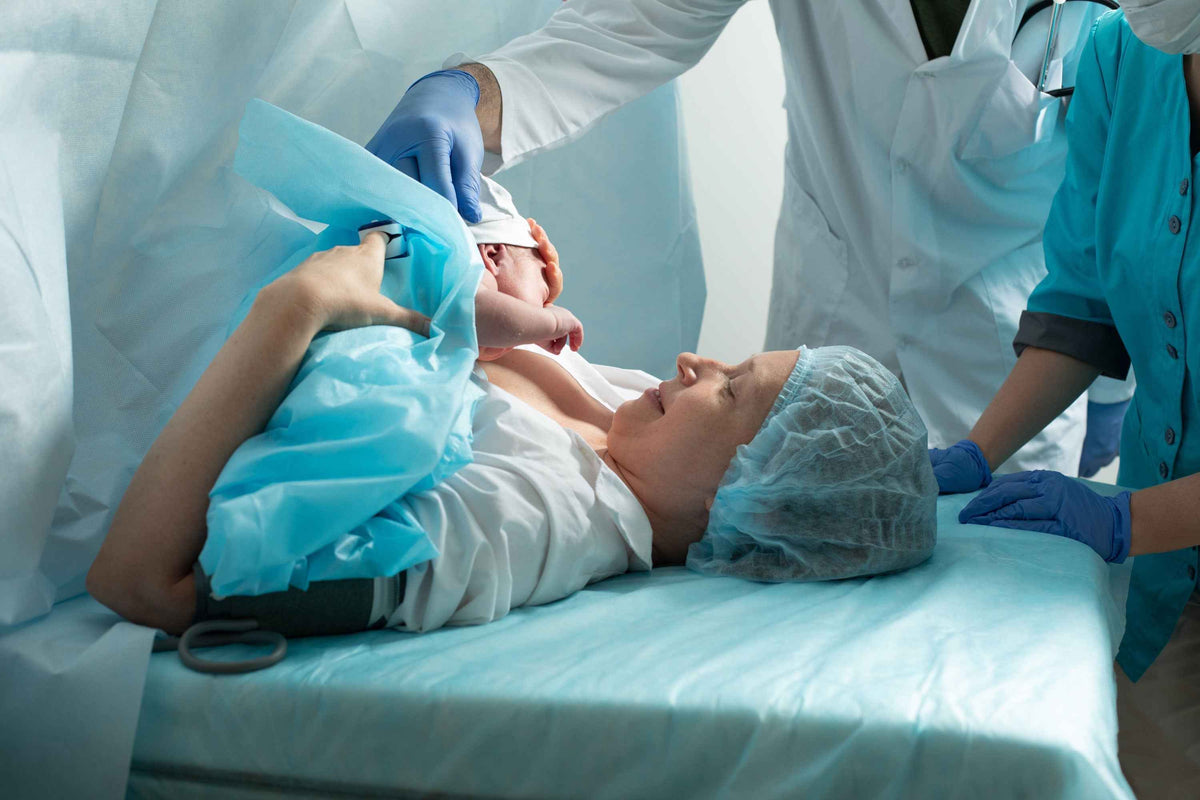
Australian hospitals typically keep c-section patients for two to four days — longer if there are complications or if you've had a general anaesthetic. Here's what the first 48 hours generally involves.
Immediately after surgery: You'll be moved to a recovery area where your blood pressure, heart rate, and the surgery site are monitored. A catheter will be in place (typically removed 12–24 hours after surgery) and compression stockings and/or calf compression devices are used to reduce the risk of blood clots. If the surgery was under spinal anaesthetic, you'll feel the numbness wearing off over one to three hours.
Pain management: Ask for pain relief before the anaesthetic wears off completely rather than waiting until you're in significant pain — staying ahead of pain is significantly more effective than catching up to it. In Australian hospitals, post-c-section pain management typically involves a combination of paracetamol, ibuprofen, and stronger opioid analgesia if needed. Be honest with your midwife about your pain levels.
First getting up: You'll be encouraged to get out of bed — with midwifery support — at around 12–24 hours post-surgery. This feels daunting but early gentle movement is important for reducing blood clot risk and speeding recovery. Use the pillow splint technique: hold a firm pillow pressed firmly against your abdomen before moving from lying to sitting. Your midwife will demonstrate this. Use it every time you get up, for at least the first two weeks.
Wound care: The external wound is typically covered with a dressing for the first 24–48 hours. After the dressing is removed, keeping the wound clean and dry is the primary care requirement. Your midwife will advise on showering and wound care before discharge — ask questions and write down the answers.
Postpartum bleeding: Lochia — postpartum bleeding — occurs after c-sections as well as vaginal births. The uterus sheds its lining regardless of how the baby was delivered. You'll need maternity pads and appropriate underwear from the outset.
Week 1 — Home, but not recovered
The hardest week. You're managing newborn care — feeding, settling, nappy changes — while recovering from abdominal surgery on fragmented sleep. Pain management is important: take paracetamol and ibuprofen on a regular schedule as advised by your GP, not just when pain becomes severe.
Avoid lifting anything heavier than your baby. No driving — most Australian insurers and medical providers advise no driving for a minimum of two weeks after a c-section, and only when you can perform an emergency stop comfortably and without hesitation. Accept every offer of practical help and treat it as the medical necessity it actually is.
Walking milestone: Short, slow walks around the house are appropriate from day one at home — even a lap of the living room counts. These gentle movements support circulation and help reduce blood clot risk. Aim to increase very gradually: by the end of week one, short walks to another room or a slow shuffle up the hallway several times a day is a realistic and useful goal. Keep sessions brief, rest often, and stop immediately if you feel increased pain, pulling at the wound, or dizziness. Do not push through pain. Progress is measured in small, consistent steps at this stage, not distance.
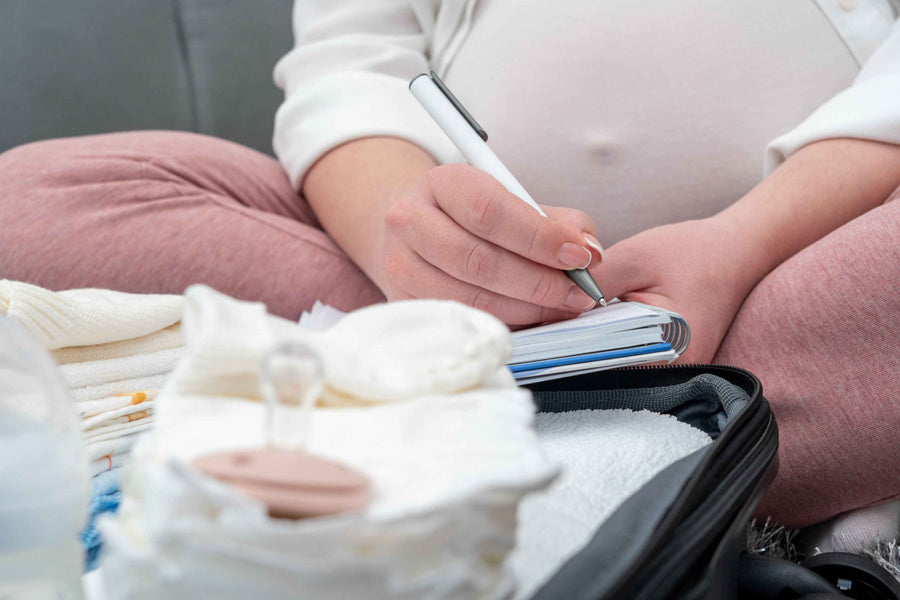
Before you come home from hospital, it helps to have your recovery essentials within arm's reach. If you haven't already thought through what to pack and what to set up at home, the hospital bag guide for Aussie mums covers the c-section recovery items worth having ready before your due date.
Do I need a peri bottle for a c-section?
Yes — and this surprises many women. Even though your surgical incision is on your abdomen, postpartum bleeding (lochia) still occurs after a c-section because the uterus sheds its lining regardless of how your baby was born. Rinsing with warm water after every toilet visit is more comfortable and more hygienic than wiping, particularly in the first two weeks when bleeding is heaviest. A peri bottle is also genuinely useful after bowel movements, which can be painful in the early weeks due to constipation and abdominal tenderness. Think of it as a straightforward addition to your c-section kit, not just a vaginal birth product.
Week 2 — External healing progressing, internal healing ongoing
The wound surface is healing and pain is generally reducing. You may start to feel more capable than you are — this is the period when overdoing it is most tempting and most counterproductive. The internal layers are still actively healing. Stitches or staples at the surface are typically removed or have dissolved, but the uterine and peritoneal layers continue repairing.
Continue avoiding heavy lifting. Constipation is common due to anaesthesia, pain medication, and reduced mobility — ask your GP about a stool softener if needed. Straining with constipation puts significant pressure on a healing abdominal wound.
Walking milestone: By the end of week two, many women are walking short distances outdoors — around the block or to the end of the street. Keep the pace slow and stop if you feel pulling, increased pain, or significant fatigue. Gradual is the right speed here.
Weeks 3–4 — Increasing capacity, scar healing continues
Pain is usually considerably reduced by now and the wound surface is well on its way to closing. Day-to-day tasks feel more manageable. It is still not the time for exercise that loads the abdominal muscles, heavy housework, or lifting beyond your baby.
The external scar is progressing through its normal healing phases: initially red and raised, then gradually flattening. Under current Australian guidance (including RANZCOG recommendations current to 2024–2025), scar massage is not recommended until the wound is fully closed — typically six to eight weeks post-surgery. Starting too early risks disrupting healing tissue. Ask your GP or pelvic floor physiotherapist before beginning.
Walking milestone: Gentle walks of 20–30 minutes are appropriate for most women at this stage, provided they are comfortable and not increasing pain. Listen to your body: increased discharge, heavier bleeding after activity, or sharp pain at the incision site are signals to pull back and check with your GP.
Numbness, tingling, and altered sensation around the scar are all common at this stage as nerve endings in the area begin to regenerate. This is a normal part of healing and does not indicate a problem.
Weeks 5–6 — Gradual return to activity
Most Australian obstetricians advise waiting until the six-week check before returning to more demanding exercise, driving long distances, and any activity involving significant abdominal loading. At the six-week appointment your GP or obstetrician will assess the wound and provide clearance guidance — but this is a minimum, not a signal that you are fully healed. Many women need several more weeks before demanding exercise is genuinely comfortable.
Walking milestone: By weeks five and six, many women are walking for 30–45 minutes at a comfortable pace. If walking feels good, your GP may clear you to begin low-impact activity after your six-week check. High-impact exercise, running, and heavy lifting should wait for specific clearance from your GP or a pelvic floor physiotherapist.
Book your six-week check and raise every concern — including emotional wellbeing, pelvic floor symptoms, and anything about the scar that doesn't look or feel right to you. This appointment is for you, not just the wound.
3–6 months — Full internal healing
The uterine scar continues to strengthen for three to six months after surgery. This matters particularly for anyone planning a future pregnancy — most Australian obstetricians recommend waiting at least twelve months before conceiving again after a c-section, to allow adequate scar healing. The external scar may be fully healed and barely visible by this stage while the internal healing is still completing. Scar massage (once the wound is fully closed — typically six to eight weeks) can help with surface scar mobility, sensitivity, and appearance.
C-section recovery essentials
Having the right things within easy reach makes a genuine difference in week one, when getting up off the couch is its own project. These are the items most useful for c-section recovery specifically — not a general newborn shopping list.
- High-waist underwear: Standard waistbands sit directly on the incision line. High-waist styles that sit above the wound entirely remove that daily irritation and pressure. For the first several weeks this is a practical necessity, not a preference.
- Peri bottle: Useful for rinsing after every toilet visit while lochia is present, and after bowel movements when abdominal tenderness makes wiping uncomfortable. The Frida Mum Peri Bottle's angled nozzle makes this easier when movement is limited.
- Firm pillow: The pillow splint — held pressed against the abdomen before any core-engaging movement — significantly reduces pain from getting up, coughing, sneezing, or laughing. Keep one on the bed, the couch, and in the car.
- Cooling pad liners and perineal foam: Postpartum haemorrhoids are common after c-sections due to pregnancy pressure, constipation, and reduced mobility. Witch hazel products provide a cooling, soothing feel regardless of birth type.
- Stool softener: Ask your GP at discharge. Constipation after c-section is extremely common and straining puts direct pressure on a healing abdominal wound. A stool softener is appropriate and sensible from day one.
For more on what to set up before your baby arrives and what to have ready at home, browse the full postpartum guides — they cover the fourth trimester from multiple angles so you're not piecing it together from scratch when you're already exhausted.
What to do and what to avoid — The clear guide
Do these things
- Take pain relief on a regular schedule — ahead of pain, not behind it
- Use the pillow splint for every movement that engages the core
- Keep the wound clean and dry as advised at discharge
- Gentle walking from week one at home — short distances, gradually increasing each week
- Rest horizontal as much as possible in week one
- Accept every offer of practical help
- Book a six-week GP check — and raise every concern
- See a pelvic floor physiotherapist — c-section mums benefit too
- Ask about scar massage at six to eight weeks
Avoid these things
- Lifting anything heavier than your baby in the first six weeks
- Driving until cleared by your GP (minimum two weeks)
- Any exercise that involves abdominal loading before six weeks
- Pushing yourself because you "feel fine" — internal healing is invisible
- Submerging the wound (baths, pools, ocean) until fully healed
- Wearing low-rise underwear or anything that sits on the incision
- Comparing your recovery timeline to a vaginal birth recovery
- Skipping the six-week check because you feel better
C-section scar care — What you need to know
Is numbness around the scar normal?
Yes — numbness, tingling, altered sensation, and hypersensitivity (feeling more sensitive than expected) around the scar are all common and can persist for months or even years as nerve endings in the area regenerate. Most women experience improvement over time but some degree of altered sensation can be permanent. This is normal and does not indicate a problem with healing.
What is scar massage and when should I start?
Scar massage is gentle manipulation of the healed scar to improve its mobility and reduce tightness or adhesion of the scar to underlying tissues. It can help with sensation recovery, reduce the pulling or tugging feeling that some women experience with movement, and improve the scar's appearance over time. Begin scar massage only after the wound is fully closed — typically six to eight weeks after surgery. Ask your GP or pelvic floor physiotherapist to demonstrate the technique before starting.
What does a normally healing scar look like?
Initially red and raised, gradually flattening and fading to pink, then silver-white over twelve to eighteen months. The scar sits low on the abdomen — typically just inside the bikini line. Some women develop a small fold of skin above the scar (the "c-section shelf") due to the way tissue redistribution occurs — this is extremely common and normal.
When to contact your GP about the scar
Increasing redness or warmth around the wound; discharge from the wound; wound separation (edges coming apart); fever alongside wound symptoms; a scar that is significantly thickening or darkening beyond the initial healing phase. These warrant prompt assessment.
The emotional side of c-section recovery
Physical recovery is only one dimension of recovering from a c-section. For many Australian women, there is also a significant emotional component — particularly for those who had an emergency c-section after planning or labouring toward a vaginal birth.
Feelings of disappointment, grief about the birth experience, disconnection from what happened, or difficulty processing a birth that felt out of control are all common and valid responses to an emergency or unexpected c-section. They are not signs of ingratitude for a healthy baby — both things can be true simultaneously. You can be grateful your baby is safe and grieve the birth experience you didn't have.
For planned c-sections, emotional responses can be different — some women feel relief and clarity about a scheduled procedure; others feel anxious or uncertain. There is no right way to feel about a c-section, planned or unplanned.
If you're finding it difficult to process your birth experience — whether that's the c-section itself, how decisions were made, what you saw or heard, or how you felt during it — speak to your GP or midwife. A referral to a psychologist with experience in perinatal mental health is appropriate and available.
Support is available
PANDA (Perinatal Anxiety & Depression Australia) supports parents experiencing difficulty after birth regardless of the birth type. Call 1300 726 306.

When to contact your GP or go to emergency
Contact your GP promptly if
The wound is showing signs of infection (increasing redness, heat, swelling, unusual discharge, smell); pain is increasing rather than decreasing after the first week; you develop a fever; you have increasing rather than decreasing vaginal bleeding after the first few days; you have calf pain or swelling (can indicate a blood clot); you are struggling emotionally and it is affecting your daily function.
Go to emergency or call 000 if
You have severe abdominal pain that comes on suddenly; you have signs of a blood clot — leg pain, swelling, redness, and warmth in one leg, or unexplained shortness of breath (which can indicate a pulmonary embolism — a clot that has moved to the lungs); you have very heavy postpartum bleeding — soaking pads rapidly while feeling dizzy or faint.
Blood clots (deep vein thrombosis and pulmonary embolism) are a specific risk after c-section due to the combination of surgery, reduced mobility, and the hypercoagulable state of pregnancy. The compression stockings you wear in hospital address this risk — but the risk continues after discharge. Leg pain or unexplained breathlessness in the weeks after a c-section warrants urgent assessment.
In Australia, call 13 HEALTH (13 43 25 84) any time, 24 hours, for nurse-on-call advice if you're unsure whether to seek urgent care.
Frequently asked questions
How long does c-section recovery take week by week?
The official minimum is six weeks for basic recovery and clearance to resume normal activities. Week one is the hardest — pain management, minimal movement, and total reliance on help. Week two brings some improvement in surface healing but internal layers are still actively repairing. Weeks three and four feel more manageable day to day, though heavy lifting and strenuous activity are still off the table. Weeks five and six bring a gradual return to light activity ahead of the six-week check. Full internal healing — particularly of the uterine scar — takes three to six months. The six-week mark is the beginning of the return to activity, not the end of recovery.
How long does a c-section take to heal on the outside?
The external wound typically closes within two to four weeks. The scar itself continues to change for much longer: it starts red and raised, then gradually flattens and fades over twelve to eighteen months, eventually settling to a pale, silvery line. At six weeks the surface looks healed, but the deeper layers are still repairing. Full external scar maturation generally takes up to a year or more.
Do I need a peri bottle for a c-section?
Yes — a peri bottle is useful after a c-section, even though the surgical incision is on your abdomen. Postpartum bleeding (lochia) still occurs after a c-section and rinsing with warm water after every toilet visit is more comfortable and hygienic than wiping. It is also helpful after bowel movements, which can be painful in the early weeks due to constipation and abdominal tenderness. A peri bottle is a straightforward addition to your c-section recovery kit.
When can I walk normally after a c-section?
Short, slow walks around the house are encouraged from day one at home. By the end of week two, many women manage a slow walk around the block. By weeks three and four, 20–30 minute gentle walks are appropriate for most women who are comfortable. Weeks five and six often bring 30–45 minute walks at a normal pace. The key at every stage is gradual progression: stop if you feel pulling at the wound, increased pain, heavier bleeding after activity, or significant fatigue. Always check with your GP before increasing activity significantly.
When can I drive after a c-section in Australia?
Most Australian obstetricians advise no driving for a minimum of two weeks and only once you can perform an emergency stop — full pressure on the brake — without pain, hesitation, or limitation from the wound. Check with your specific insurer, as driving after surgery without medical clearance can affect your coverage in an accident. Get written or documented GP clearance before driving if your insurer requires it.
Will I need a c-section for future pregnancies?
Not necessarily. Vaginal Birth After Caesarean (VBAC) is a viable option for many Australian women and is actively supported by Australian obstetric guidelines. Whether VBAC is appropriate depends on the reason for the original c-section, the type of uterine incision, and individual circumstances. This is a detailed conversation to have with your obstetrician when planning a future pregnancy — ideally at least twelve months after your c-section to allow adequate scar healing.
Is numbness around the scar permanent?
Not usually — but it can take many months to fully resolve, and some degree of altered sensation may be long-term. Numbness and tingling occur because small nerve fibres in the skin are disrupted by the incision. Most sensation returns gradually as nerve fibres regenerate, which is a slow process. Scar massage (from six to eight weeks) can support sensation recovery. If numbness is significantly affecting quality of life, raise it with your GP or physiotherapist.
Can I breastfeed after a c-section?
Yes — a c-section does not prevent breastfeeding. Skin-to-skin contact in the operating theatre or recovery room is increasingly standard practice in Australian hospitals and supports the initiation of breastfeeding. Some women find that milk comes in slightly later after a c-section compared to vaginal birth — this is related to hormonal differences in the labour process — but it does not prevent successful breastfeeding. Ask your midwife or a lactation consultant for support if you're having difficulty establishing feeding.