Postpartum Guides
What is lochia? Your guide to postpartum bleeding after birth
Nobody told you about this part. You expected some bleeding after birth, you just didn't expect quite this much of it, for quite this long, starting and stopping and changing colour in ways that feel alarming but are, in fact, completely normal.
It's called lochia, and it's one of the most common postpartum experiences Australian mums feel underprepared for. This guide covers exactly what lochia is, what to expect at each stage, when something warrants a call to your midwife, and what actually helps you manage it comfortably.
What is lochia?
Lochia is the postpartum vaginal discharge that occurs after birth as the uterus sheds its lining. It consists of blood, mucus, uterine tissue, and white blood cells — everything the uterus no longer needs after pregnancy ends. It happens after both vaginal and c-section births.
Unlike a period, lochia is not triggered by hormones. It's a healing process — the uterus returning to its pre-pregnancy state, a process called involution. The uterus goes from roughly the size of a watermelon at full term to its normal fist size over approximately six weeks, and lochia is part of that process.
Most Australian women experience lochia for between four and six weeks after birth, though the duration varies. The flow is typically heaviest in the first few days and gradually reduces in volume and changes in colour as healing progresses.

The three stages — What to expect week by week
Stage 1 — Lochia rubra (days 1–4)
Bright red and heavy — similar to a heavy period but typically heavier, particularly in the first 24 hours. May contain small clots. This is the most intense stage and the one that surprises most first-time mums. You'll need thick maternity pads and will likely change them frequently. Breastfeeding can temporarily increase flow as it triggers uterine contractions — this is normal and actually helps the uterus contract back to size faster.
Stage 2 — Lochia serosa (days 4–10)
Flow reduces and shifts from bright red to pinkish-brown or watery pink. Still requires maternity pads but noticeably lighter. The colour change signals that the initial healing phase is progressing well.
Stage 3 — Lochia alba (days 10 through 6 weeks)
Discharge becomes yellowish-white or cream coloured with minimal to no blood. Much lighter — some mums transition to thinner pads or liners at this stage. The discharge may continue intermittently until around six weeks postpartum.
Common pattern note
It's normal for lochia to temporarily increase in redness and flow after more physical activity — particularly in the first two weeks. This is your body's signal to slow down. If flow consistently increases rather than decreases over the first week, contact your midwife.
Lochia after a c-section — Is it different?
One of the most common misconceptions about c-sections is that you won't bleed much afterward because "the baby didn't come out that way." This is not accurate. Lochia occurs after every birth regardless of how the baby was delivered — vaginal or c-section.
The uterus sheds its lining after any birth. The process is the same. The three stages — rubra, serosa, alba — follow the same general timeline. C-section mums typically experience slightly less initial heavy flow than after a vaginal birth (because the uterus has been handled differently during surgery), but the overall pattern and duration of lochia is similar.
What does change with c-section is the underwear situation. Standard underwear sits directly on the incision line. For the first several weeks of postpartum recovery, high-waist underwear that sits above the scar entirely is significantly more comfortable and avoids pressure on the healing wound while still holding pads securely in place.

Lochia and breastfeeding — What's the connection?
If you're breastfeeding, you may notice that your lochia temporarily increases during or after feeds — particularly in the first week. This is completely normal and is caused by oxytocin, the hormone released during breastfeeding that triggers the let-down reflex. Oxytocin also causes uterine contractions, which can briefly increase lochia flow.
These contractions — sometimes called afterpains — can be noticeable, particularly in second and subsequent pregnancies where the uterus responds more strongly. They typically ease significantly after the first week.
The positive side: breastfeeding helps the uterus return to its pre-pregnancy size faster. The temporary increases in lochia during feeds are a sign this process is working. If increased flow during feeding is significant or concerning, mention it to your midwife.
Breastfeeding also delays the return of your menstrual period — often until you reduce feeding frequency or wean. This is separate to lochia, which will run its course regardless of whether you breastfeed or not.
What helps — Practical management
At a glance
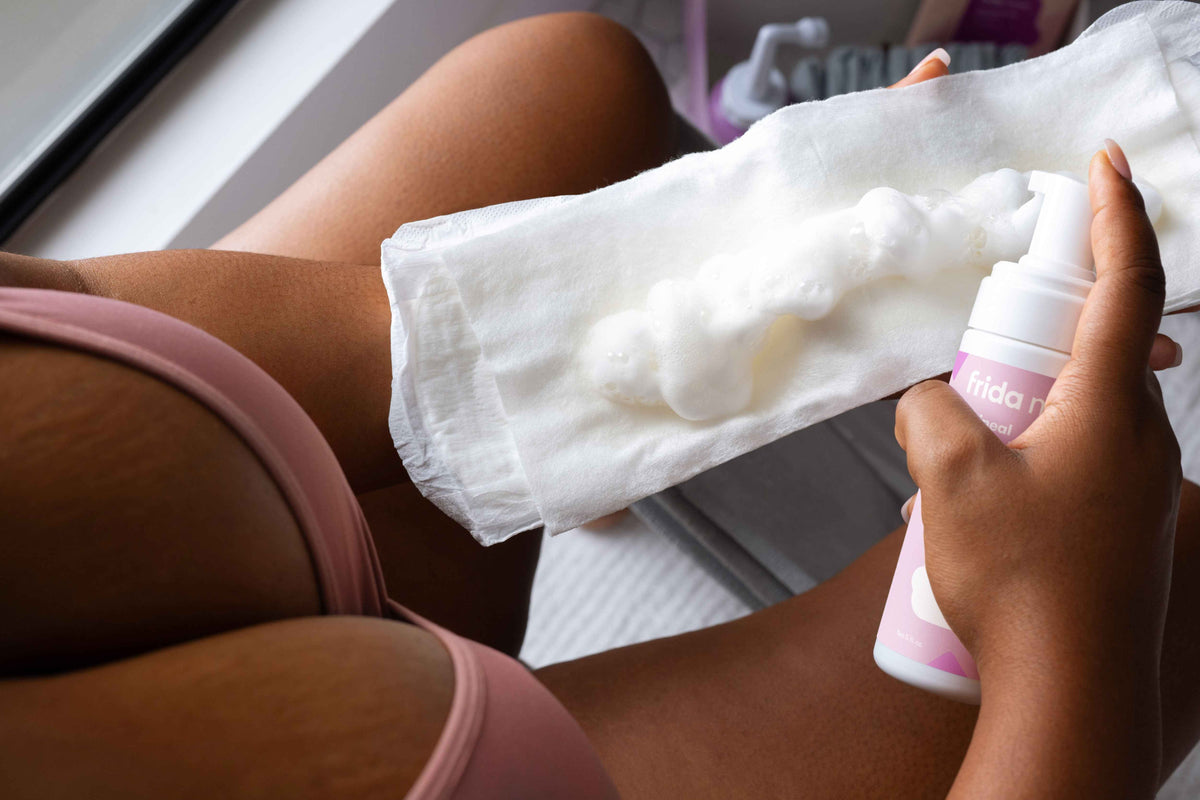
Maternity pads: Use thick, long maternity pads rather than regular period pads for the first two weeks — the absorbency and length are necessary. Avoid tampons or menstrual cups until cleared by your GP (typically after your six-week check).
Disposable underwear: Soft, stretchy disposable underwear holds pads securely and eliminates the mental load of washing. The Frida Mom disposable underwear comes in boyshort and high-waist cuts — the high-waist version is particularly useful for c-section recovery as it doesn't sit on the incision line.
Peri bottle: After any toilet visit, rinse the perineal area with warm water using a peri bottle rather than wiping. Wiping can irritate healing tissue and is uncomfortable when flow is heavy. The Frida Mom Peri Bottle's angled nozzle reaches properly without awkward positioning.
Rest: Increased activity reliably increases lochia. The first two weeks are genuinely not the time to test your recovery limits. Horizontal rest — ideally with the baby on your chest — supports both lochia management and uterine involution.
Frequently asked questions
How long does lochia last?
Most Australian women experience lochia for four to six weeks after birth. The heaviest flow is in the first four days, gradually reducing. Some women stop earlier; some continue lightly until six weeks. If significant bleeding continues beyond six weeks, see your GP.
Is lochia the same after a c-section?
Yes — lochia occurs after c-section births as well as vaginal births. The uterus still needs to shed its lining regardless of how the baby was delivered. C-section mums typically experience slightly less initial flow than after vaginal birth but the overall pattern and duration is similar.
Can I use tampons during lochia?
No — tampons and menstrual cups are not recommended during lochia. The vaginal canal and uterus are healing and anything inserted increases infection risk. Use maternity pads only until cleared by your GP at your six-week check.
Is it normal for lochia to smell?
A mild, slightly metallic smell is normal — similar to period blood. An unpleasant, strong, or unusual odour is not normal and can indicate infection. Contact your GP or midwife promptly if lochia develops an abnormal smell.