
Baby Care Guides
Cradle cap in babies: what it is and how to manage it gently
Cradle cap is very common in young babies and usually clears on its own. Here is what it looks like, how to manage it gently in the bath, and when to see your GP or child health nurse.
Quick answer
Cradle cap is a build-up of greasy, yellowish or white scales on a baby's scalp. It is very common in the first months of life, it is not contagious, and it usually clears on its own. Most babies are not bothered by it at all.
You do not have to do anything about cradle cap. If you would like to tidy it up, the gentle approach is to soften the scales, loosen them with a soft brush in the bath and lift away only what comes off easily. This guide covers what cradle cap looks like, how to manage it at home, what to avoid, and when to check in with your GP or child health nurse.
At a glance
- What it is: greasy or waxy scales and crusts on the scalp, sometimes on the eyebrows
- When it appears: usually in the first few months
- Is it contagious: no, and it is not caused by poor hygiene
- Does it bother baby: usually not, and it is not usually itchy
- What helps: softening, gentle brushing in the bath, and patience
- See a GP or nurse if: the skin is red, weeping, spreading or not improving
What cradle cap looks like
Cradle cap shows up as patches of scale on the scalp. The patches can be yellowish, white or brownish, and they often look greasy or waxy rather than dry. Some babies have one small patch. Others have a thick layer across most of the scalp. It can be harder to see on a baby with a lot of hair, and it can appear on the eyebrows too.
It tends to look worse than it feels. A baby with cradle cap usually feeds, sleeps and behaves exactly as they did before it appeared.
What causes cradle cap?
The exact cause is not fully understood. It is thought to be linked to the oil made by a young baby's skin in the first months. It is not an allergy, it is not something your baby caught from someone else, and it does not mean their hair has not been washed enough.
That last point matters, because many parents respond by washing and scrubbing more. More scrubbing does not clear cradle cap faster, and it can irritate the scalp.
How to manage cradle cap at home, step by step
- Soften first. If the scales are thick, massage a small amount of baby oil or petroleum jelly into them and let it soak in. Many child health nurses suggest doing this a little while before the bath, or overnight.
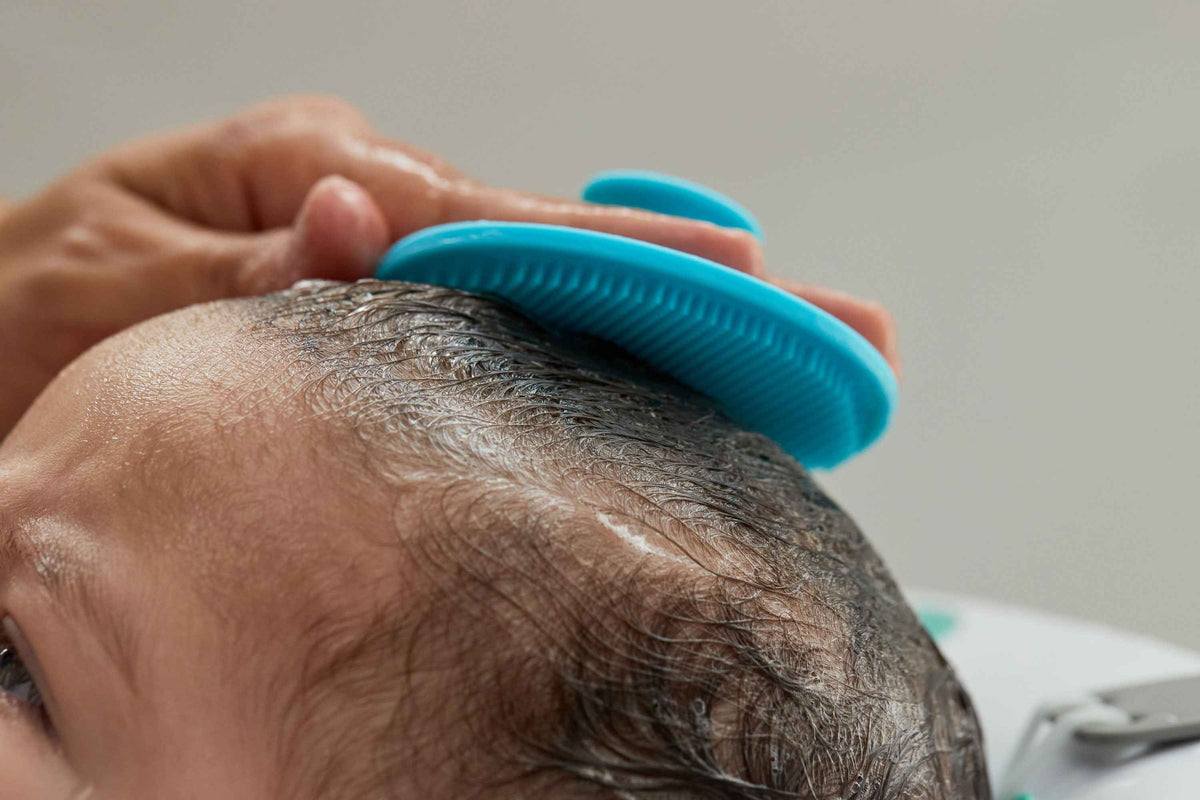
- Lather in the bath. Wet the scalp and work in a mild baby wash with a soft sponge or your hand.
- Loosen. Brush in small, light circles with a soft baby brush. You are loosening the scales, not scrubbing them off.
- Lift only what is ready. Comb through gently and remove the flakes that come away easily. Leave anything that is still stuck for another day.
- Rinse and pat dry. Rinse the wash and any oil out well, then pat the scalp dry with a soft towel.
- Repeat a couple of times a week. Not every bath. Over-scrubbing irritates the scalp.
Expect this to take a few weeks rather than a few days. New scales can form while the old ones are lifting, so the scalp may look better, then worse, then better again.
What not to do
- Do not pick or scratch at the scales. Forcing them off can leave the skin raw and sore.
- Do not scrub every day. A couple of gentle sessions a week is enough.
- Do not use adult dandruff shampoo or any medicated product unless your GP or pharmacist has recommended it for your baby.
- Keep everything away from the eyes. On the eyebrows, use only a soft sponge and a soft brush, very gently.
Cradle cap, or something to have checked?
| Typical cradle cap | Worth a check | |
|---|---|---|
| How it looks | Greasy or waxy yellowish scales | Red, cracked, weeping or crusted skin |
| Itch | Usually not itchy | Baby is scratching at it or seems unsettled by it |
| Where it is | Scalp, sometimes eyebrows | Spreading to the face, body or nappy area |
| Over time | Slowly improves | No better after a few weeks, or getting worse |
Other skin conditions can look similar at first. Only a health professional who has seen your baby's skin can tell you which one it is.
When to check in with your GP or child health nurse
Cradle cap rarely needs medical care, but it is worth having your baby seen if:
- the scalp is red, swollen, weeping or bleeding
- there is a bad smell or any sign of infection
- the rash is spreading beyond the scalp and eyebrows
- your baby seems itchy or uncomfortable
- it is not improving after a few weeks of gentle care
- your baby has a fever or seems unwell
Your child health nurse sees cradle cap every week. It is a perfectly reasonable thing to ask about at a routine visit.
How long does cradle cap last?
For most babies it clears on its own over the first year, often within a few months. It can come and go during that time. Gentle care keeps it tidy in the meantime, and it is fine to leave it alone if it is not bothering your baby.
The tools, if you want them
A soft sponge, a soft brush and a fine comb are all you need for the bath routine above. The Frida Baby Flake Fixer puts those three pieces in one kit: a sponge to lather, a silicone brush to loosen and a fine-tooth comb to lift the flakes that are ready. For dry patches elsewhere, the Skinsoother is a soft silicone brush that fits in your palm. You can see the rest of the range in Frida Baby skin care, and if nails are next on your list, read our guide on how to cut a baby's nails.
FAQs
Is cradle cap contagious?
No. Cradle cap cannot be passed from one baby to another, and it is not caused by poor hygiene. It is a very common skin condition in the first months of life.
Does cradle cap itch or hurt?
Usually not. Most babies do not seem to notice it. If your baby is scratching at their scalp or seems uncomfortable, have it checked by your GP or child health nurse, because another skin condition may be involved.
How long does cradle cap last?
It usually clears on its own over the first year, often within a few months. It can come and go in that time. If it is not improving after a few weeks of gentle care, ask your GP or child health nurse to have a look.
Should I pick off cradle cap?
No. Picking or scratching at the scales can leave the skin raw and sore. Soften the scales first, loosen them with a soft brush in the bath, and lift away only the flakes that come off easily.
Can I use oil on cradle cap?
A small amount of baby oil or petroleum jelly massaged into thick scales can soften them before the bath. Wash it out afterwards. If you are unsure which product to use on your baby, ask your child health nurse or pharmacist.
Can cradle cap appear on the eyebrows?
Yes, it can. Be very gentle there, use only a soft sponge and a soft brush, and keep wash and oil away from the eyes. If scales appear on other parts of the face or body, ask your GP or child health nurse.
How often should I brush cradle cap?
A couple of times a week in the bath is enough. Brushing or scrubbing every day can irritate the scalp and does not clear it faster.