


Frida Baby SnipperClipper Set
- Regular price
-
$27.99 - Regular price
-
- Sale price
-
$27.99
Patented safety spyhole, see before you cut
Curved blades shaped for baby nails
Safe from birth
Cutting a baby's nails is terrifying. Those teeny tiny fingernails that seem to grow overnight and scratch everything, including your face.
The SnipperClipper Set gives you nail clippers with a built-in magnifying glass and a file, plus a spatula guard so you can't accidentally nick your bub's skin.
Deep breaths. You've got this.
Couldn't load pickup availability
What's in the Box
- 1 × NailFrida SnipperClipper
- 1 × S-shaped baby nail file
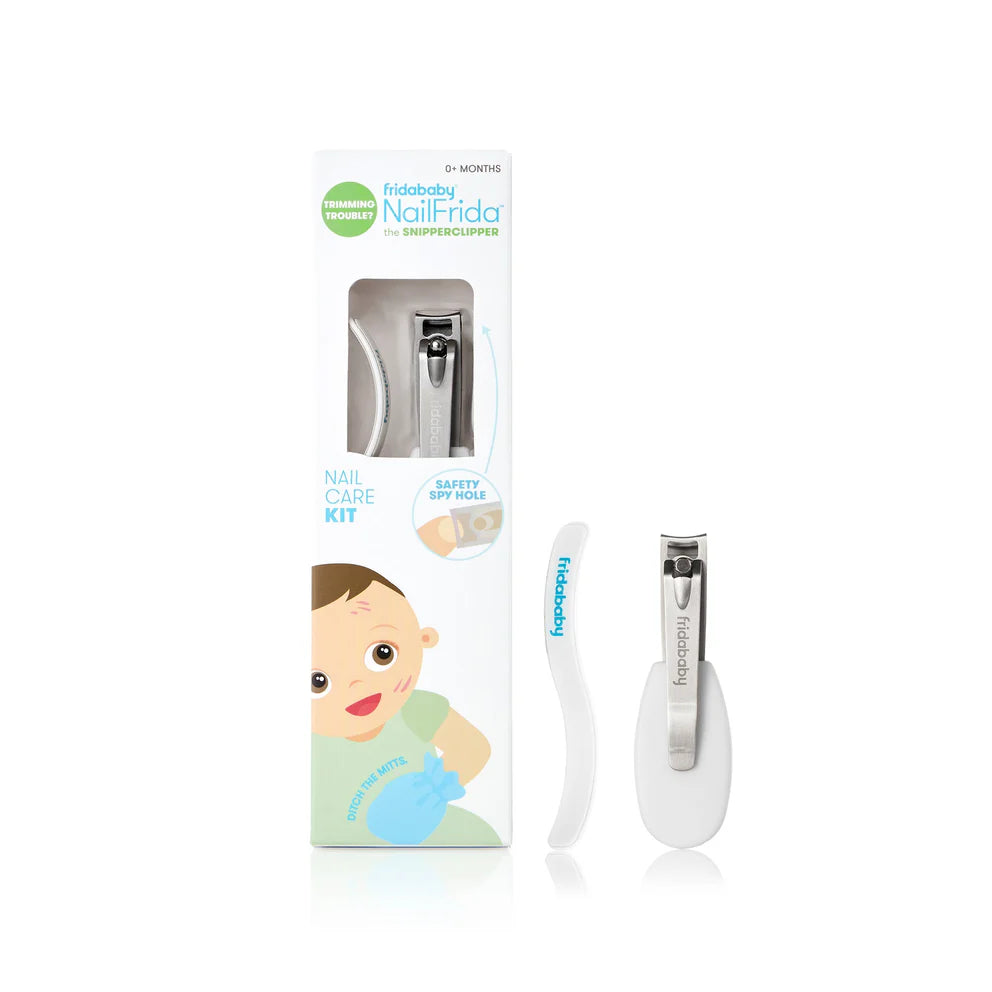
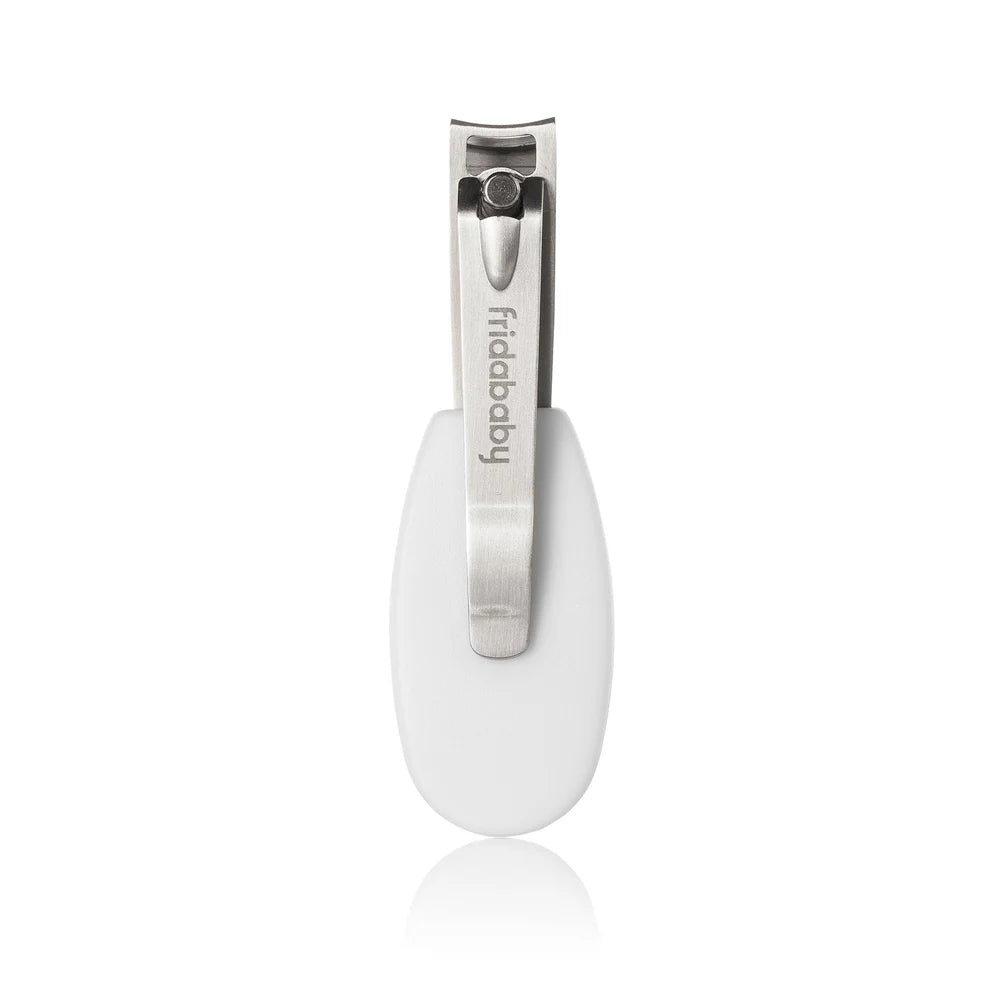
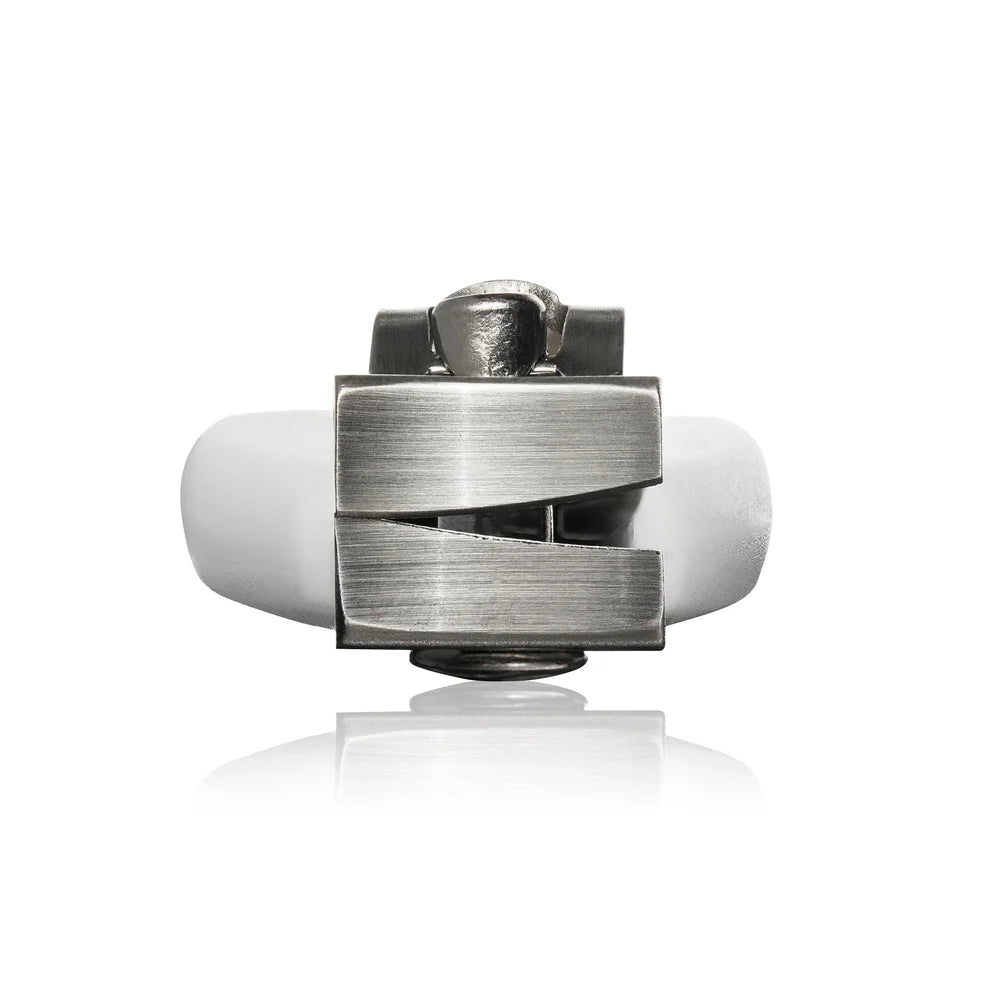

Tiny nails. Big anxiety. One tool that fixes both.
The spyhole shows you exactly what you're cutting before you cut it. The curved blades follow the nail shape. The S-file smooths the edges. Newborn nail clipping becomes, if not enjoyable, at least survivable.

Why cutting a newborn's nails feels impossible and what makes it easier
Newborn nails are thin, soft, and very close to the skin. They grow quickly most newborns need trimming within the first week, and fortnightly after that. The combination of tiny scale, soft nail, close skin, and a baby who moves without warning makes standard nail clippers genuinely hazardous on fingers this small.
The most common mistakes are going too fast and not being able to see the nail edge before cutting. A standard clipper gives you no visibility of what's inside the cutting mouth before you squeeze, which is exactly why nicking the fingertip is so common.
The SnipperClipper solves both problems. The patented spyhole lets you look directly at the nail before cutting. The curved blades mirror the convex shape of a baby nail for a more accurate cut in fewer passes. Less fumbling. Less risk. More confidence — even on day one.
What's in the set - Two tools. One nail trimming problem solved.
-
What's in the set - Two tools. One nail trimming problem solved.
Newborn nails are thin, soft, and very close to the skin. They grow quickly and most newborns need trimming within the first week, and fortnightly after that. The combination of tiny scale, soft nail, close skin, and a baby who moves without warning makes standard nail clippers genuinely hazardous on fingers this small.
The most common mistakes are going too fast and not being able to see the nail edge before cutting. A standard clipper gives you no visibility of what's inside the cutting mouth before you squeeze, which is exactly why nicking the fingertip is so common.
The SnipperClipper solves both problems. The patented spyhole lets you look directly at the nail before cutting. The curved blades mirror the convex shape of a baby nail for a more accurate cut in fewer passes. Less fumbling. Less risk. More confidence, even on day one.
-
The spyhole - The feature that makes this worth buying.
Every other baby nail clipper asks you to position the cutting mouth around the nail and squeeze, trusting that you've judged the depth correctly. With a two-week-old's nails on their corresponding fingertips, approximately the width of a pea, guessing the depth is exactly where accidents happen.
The SnipperClipper has a small circular window on top of the clipper body. When you position the clipper around your baby's nail, you look through this spyhole and see exactly how much nail is inside the cutting mouth before you squeeze. You can see the nail edge. You can see where the skin starts. You decide when the position is right, and only then apply pressure.
It's a small design change with an enormous practical impact. The spyhole is patented for good reason, it genuinely solves the core problem of baby nail clipping. Parents who've nicked a fingertip with a standard clipper and then discovered the SnipperClipper describe it as one of those products they wish they'd had from day one.
What makes this different to a standard clipper.
-
Patented safety spyhole
Look through the window to see exactly where the nail ends and skin begins before cutting. The only baby nail clipper that shows you what you're doing before you do it.
-
Curved overlapping blades
Follows the natural convex curve of a baby nail rather than cutting flat across. A more accurate cut in fewer passes, less chance of jagged edges or a second anxious attempt.
-
Silent snipping
The overlapping blade design cuts quietly rather than with the sharp snap of a standard clipper. Ideal for cutting nails while your bub is asleep, the optimal nail-cutting window.
-
Nickel-free stainless steel
Hypoallergenic blades appropriate for sensitive newborn skin. Stays sharp and rust-resistant, effective well into the toddler years without replacement.
-
S-shaped nail file included
The curved S-file follows the rounded contour of a baby's nails, not at the awkward angle a flat file requires. Smooths sharp edges for a genuinely finished result.
-
Safe from birth to toddler
One set that works from day one through the toddler years. You'll replace the file before you replace the clipper.
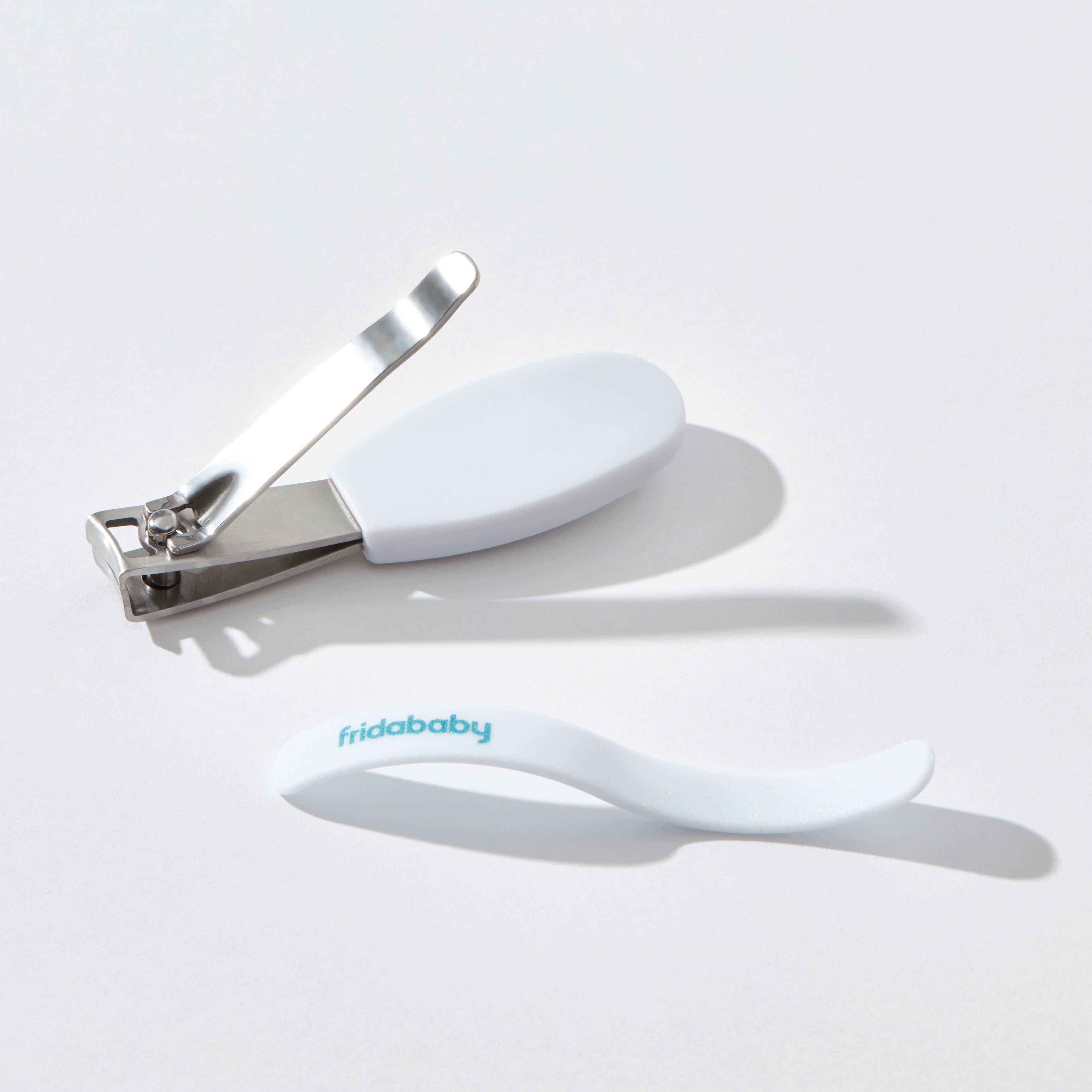
How to cut your baby's nails with the SnipperClipper
Slow, deliberate, well-lit. That's the whole strategy.
Step 1 — Choose your moment. The best time is during deep sleep, after a feed, after a warm bath, or during a long nap. A still baby is a safe nail-cutting experience. A wriggling awake baby is not.
Step 2 — Get good lighting. Baby nails are thin and the distinction between nail and skin is subtle. Natural daylight or a lamp pointed directly at the hand makes an enormous practical difference.
Step 3 — Hold the finger firmly but gently. Press the fingertip pad down and away from the nail with your thumb, this creates a small gap between nail and skin and reduces the chance of catching any skin.
Step 4 — Position the SnipperClipper. Slide the clipper mouth around the nail. Look through the spyhole to confirm the nail is inside the cutting area and no skin is caught. Take your time here.
Step 5 — Squeeze slowly and steadily. Apply gentle, even pressure to close the blades. One clean squeeze per section — don't saw or re-cut.
Step 6 — File the edges. Use the S-shaped file to smooth any sharp corners. This is the step that prevents post-trimming face scratches. Don't skip it.
Step 7 — Repeat fortnightly. Newborn nails grow faster than expected. Weekly or fortnightly trimming is usually needed. Toenails can typically wait three to four weeks.
How often do baby nails actually need cutting?
-
Newborns (0–3 months)
Fingernails every 1–2 weeks. Many paediatric nurses recommend filing rather than clipping for the first two to four weeks while nails are extremely soft. Toenails every 3–4 weeks.
-
Babies (3–12 months)
Fingernails every 1–2 weeks. Toenails every 3–4 weeks. As babies become more mobile, keeping nails short becomes important for hygiene as well as scratch prevention.
-
Toddlers (12 months+)
Fingernails every 1–2 weeks. Toenails every 2–3 weeks. Toddler nails are harder, the SnipperClipper continues to work well at this stage and beyond.
-
The newborn exception
Some babies are born with long nails that need attention in the first days. If your newborn is scratching from birth, filing is safer than clipping in the first week.
Questions? We've got answers.
Is it safe to cut a newborn's nails in the first week?
Yes — but many Australian paediatric nurses recommend filing rather than clipping in the first two to four weeks while nails are extremely soft. Once past that stage, the SnipperClipper is appropriate and the spyhole makes it significantly safer than a standard clipper.
What does the safety spyhole actually do?
It's a small circular window on top of the clipper body. You look through it to see exactly how much nail is inside the cutting mouth — and whether any skin is caught — before applying pressure. It removes the guesswork from baby nail clipping, which is where most nicks happen.
What if I accidentally nick the fingertip?
Apply gentle pressure with a clean cloth — never a plaster on a baby's finger (choking hazard). The skin heals very quickly. It happens to almost every parent at some point and causes far more distress to you than to your baby.
Can I use the SnipperClipper on toenails too?
Yes — same approach applies. Baby toenails are harder and grow more slowly than fingernails.
When is the best time to cut my baby's nails?
During deep sleep — the baby is still, you can work at your own pace, and there's no protest. After a warm bath is the second best option. The worst time is when your baby is awake, alert, and in the mood to grab things.
Where can I buy the Frida Baby SnipperClipper Set in Australia?
Online at fridaaustralia.com.au with fast shipping Australia-wide. Also at Baby Bunting. Worth buying before the baby arrives — the first nail-cutting situation tends to present itself within the first week.
More from the Frida Baby Range
-
 Frida Baby NoseFridaFrida Baby NoseFrida
- Regular price
-
$23.99 - Regular price
-
- Sale price
-
$23.99
Quick view
-
 Frida Baby SkinsootherFrida Baby Skinsoother
- Regular price
-
$22.99 - Regular price
-
- Sale price
-
$22.99
Quick view
-
 Frida Baby MediFridaFrida Baby MediFrida
- Regular price
-
$27.99 - Regular price
-
- Sale price
-
$27.99
Quick view
-
 Frida Baby 3-in-1 Nose, Nail & Ear PickerFrida Baby 3-in-1 Nose, Nail & Ear Picker
- Regular price
-
$21.99 - Regular price
-
- Sale price
-
$21.99
Quick view
-
 Frida Baby FingerbrushFrida Baby Fingerbrush
- Regular price
-
$16.99 - Regular price
-
- Sale price
-
$16.99
Quick view
-
 Frida Baby NoseFrida FiltersFrida Baby NoseFrida Filters
- Regular price
-
$11.99 - Regular price
-
- Sale price
-
$11.99
Quick view
-
 Frida Baby SnipperClipper SetFrida Baby SnipperClipper Set
- Regular price
-
$27.99 - Regular price
-
- Sale price
-
$27.99
Quick view
-
 Frida Baby ToothHugger (Yellow)Frida Baby ToothHugger (Yellow)
- Regular price
-
$16.99 - Regular price
-
- Sale price
-
$16.99
Quick view
-
 Frida Baby Flake FixerFrida Baby Flake Fixer
- Regular price
-
$27.99 - Regular price
-
- Sale price
-
$27.99
Quick view


